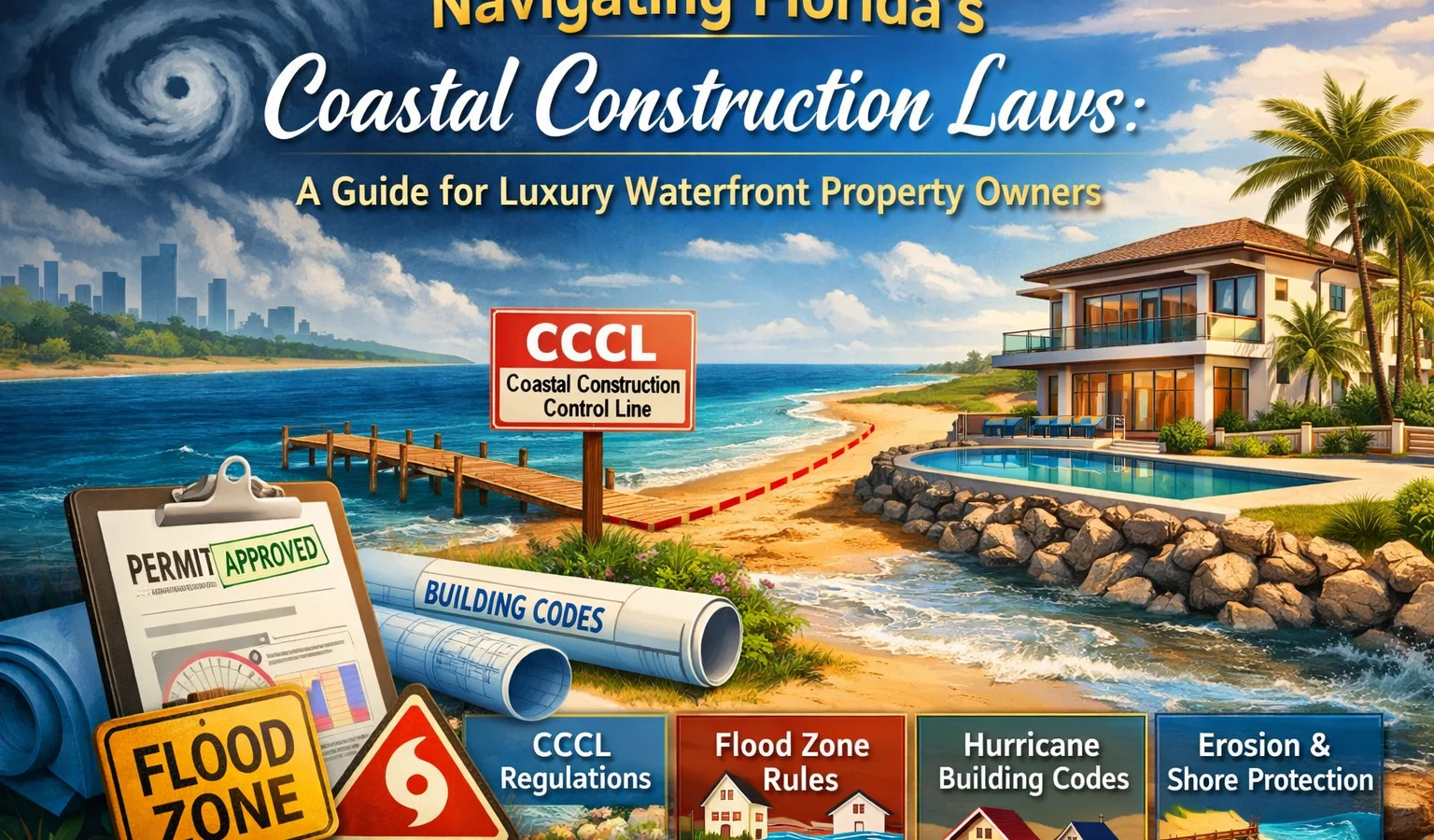
Navigating the complexities of Florida’s coastal construction laws is essential for luxury property owners looking to invest in waterfront homes. This comprehensive guide will provide insights into the regulations that govern coastal construction, ensuring that homeowners are well-informed about their rights and responsibilities. Understanding these laws is crucial, as they can significantly impact property values, development potential, and overall investment strategies. This article will cover key aspects such as the Florida Coastal Construction Control Line (CCCL), building codes, legal considerations, flood zones, and strategies for protecting waterfront properties. By the end, readers will have a clearer understanding of how to navigate these regulations effectively.
What is the Florida Coastal Construction Control Line and How Does It Affect Waterfront Properties?
The Florida Coastal Construction Control Line (CCCL) is a regulatory boundary established to protect coastal ecosystems and properties from the impacts of erosion and storm damage. This line delineates areas where construction is subject to specific regulations aimed at minimizing environmental impact and ensuring safety. Understanding the CCCL is vital for luxury waterfront property owners, as it directly influences development opportunities and property values.
What is the purpose and jurisdiction of the CCCL in Florida coastal zones?
The primary purpose of the CCCL is to safeguard coastal resources and properties from the adverse effects of natural disasters, such as hurricanes and flooding. The jurisdiction of the CCCL extends along Florida’s Atlantic and Gulf coasts, where construction activities are closely monitored. Properties located seaward of the CCCL face stricter regulations, which can limit development options and require additional permitting processes. For instance, any construction within this zone must adhere to specific guidelines that prioritize environmental conservation and public safety.
Further research highlights the significant long-term implications of Florida’s CCCL permitting program on the state’s valuable beach ecosystems.
Florida CCCL: Permitting & Coastal Construction Impact
This article examines the long-term effect of the state’s permitting program for construction of major habitable structures and armoring on Florida’s beaches.
Eroding long-term prospects for Florida’s beaches: Florida’s coastal construction control line program, TK Ruppert, 2008
How do CCCL regulations impact luxury waterfront property values and development?
CCCL regulations can significantly affect the market value of luxury waterfront properties. Properties located within or seaward of the CCCL may experience reduced development potential due to stringent building codes and permitting requirements. This limitation can lead to decreased demand, ultimately impacting property values. Conversely, properties that comply with CCCL regulations may be viewed as more desirable due to their adherence to safety and environmental standards, potentially enhancing their market appeal.
Studies have further explored how these regulations directly influence the financial landscape and tax base related to beachfront properties.
CCCL Impact on Florida Beachfront Property Values
Two factors comprise any potential impact on the tax base of Martin County. First, any net impact in beachfront property values would directly impact the tax base.
The Coastal Construction Control Line: A Cost-Benefit Analysis, 1981
How to Navigate Florida Building Codes and Permitting Requirements for Coastal Waterfront Homes?
Navigating Florida’s building codes and permitting requirements is essential for anyone looking to construct or renovate a coastal waterfront home. These regulations are designed to ensure that buildings are resilient to the unique challenges posed by coastal environments, including high winds and flooding.
What are the key Florida Building Code requirements for hurricane-resistant coastal construction?
Florida’s Building Code mandates specific requirements for hurricane-resistant construction, particularly in coastal areas. Key provisions include:
- The use of impact-resistant windows and doors
- Elevated foundations to mitigate flood risks
- Reinforced structural elements to withstand high winds
Compliance with these codes not only enhances the safety of the property but also ensures that it meets insurance requirements, which can be crucial for securing financing and protecting investments.
Historical analyses confirm the critical role of Florida’s building codes in promoting robust, hurricane-resistant construction practices.
Florida Coastal Building Codes for Hurricane Resistance
building codes in use in Florida that are oriented toward hurricane-resistant construction. The Coastal Building Code roof coefficients are more stringent than the South Florida Building Code.
Florida’s approach to hurricane-resistant design and construction, 1989
How to obtain FDEP coastal construction permits for seawalls, docks, and marine structures?
Obtaining permits from the Florida Department of Environmental Protection (FDEP) for coastal construction projects, such as seawalls and docks, involves a detailed application process. Homeowners must submit plans that demonstrate compliance with environmental regulations and provide evidence of minimal impact on coastal ecosystems. The process typically includes public notice requirements and may involve consultations with environmental agencies. Understanding these steps is crucial for ensuring timely project approvals and avoiding costly delays.
| Permit Type | Description | Application Process |
|---|---|---|
| Seawall Permit | Required for constructing seawalls to protect against erosion | Submit plans to FDEP, including environmental impact assessments |
| Dock Permit | Necessary for building docks and marine structures | Application must demonstrate compliance with coastal regulations |
| Marine Structure Permit | Required for any permanent structures in coastal waters | Detailed plans and environmental assessments are needed |
Navigating the permitting process can be complex, but understanding the requirements can streamline approvals and facilitate successful construction projects.
What Legal Considerations Should Waterfront Homeowners Know About Florida Property Laws?
Waterfront homeowners in Florida must be aware of various legal considerations that can affect their property rights and responsibilities. Understanding these laws is essential for protecting investments and ensuring compliance with state regulations.
What are riparian rights and water access laws for Florida waterfront homeowners?
Riparian rights refer to the legal entitlements of property owners whose land borders a body of water. In Florida, these rights grant homeowners access to the water for recreational purposes, such as boating and fishing. However, these rights can be subject to local regulations and may vary depending on the specific waterway. Additionally, Florida law recognizes littoral rights for properties bordering tidal waters, which include rights related to the use and access of the shore. Homeowners should familiarize themselves with these laws to fully understand their rights and any restrictions that may apply.
What seller disclosure requirements apply to coastal properties in Florida?
Florida law mandates that sellers of coastal properties disclose specific information to potential buyers, including any known issues related to flooding, erosion, or environmental hazards. This requirement ensures that buyers are fully informed about the property’s condition and any potential risks associated with coastal living. Failure to disclose such information can lead to legal disputes and financial liabilities for sellers.
How Do Flood Zones and Insurance Affect Florida Waterfront Home Construction and Ownership?
Flood zones play a critical role in determining construction standards and insurance requirements for waterfront properties in Florida. Understanding these factors is essential for homeowners to protect their investments and ensure compliance with state regulations.
What FEMA flood zone regulations apply to coastal homes and how do they influence building standards?
The Federal Emergency Management Agency (FEMA) designates flood zones based on the risk of flooding in specific areas. Properties located in high-risk flood zones (Special Flood Hazard Areas, or SFHAs) are subject to stricter building standards, including elevated construction and flood-resistant materials. These regulations are designed to minimize damage during flooding events and protect homeowners from significant financial losses. Understanding FEMA’s flood zone designations is crucial for homeowners to ensure compliance and secure appropriate insurance coverage.
How does flood insurance impact waterfront property investment and risk management?
Flood insurance is a critical consideration for waterfront property owners, as standard homeowners’ insurance policies typically do not cover flood damage. The cost of flood insurance can vary significantly based on the property’s location within a flood zone and its elevation. Homeowners should assess their flood risk and consider obtaining flood insurance to protect their investments. Additionally, understanding the implications of flood insurance can aid in effective risk management strategies for waterfront properties.
What Strategies Can Protect and Future-Proof Luxury Waterfront Homes Against Coastal Erosion and Regulatory Changes?
As coastal environments continue to evolve, luxury waterfront homeowners must adopt strategies to protect their properties from erosion and adapt to regulatory changes. Implementing effective measures can enhance property resilience and long-term value.
What coastal erosion protection methods and resilience measures are recommended for Tampa Bay properties?
- The installation of seawalls, which provide a physical barrier against wave action
- Living shorelines, which utilize natural materials to stabilize the shoreline and enhance habitat
- Beach nourishment, which involves adding sand to eroded beaches, providing a buffer against storm surges
Homeowners should consider these options based on their specific property conditions and environmental impact.
How do 30-year erosion projection lines influence development and property value?
The 30-year erosion projection lines indicate areas at risk of erosion over the next three decades. Properties located within these lines may face increased scrutiny during the permitting process and could experience diminished market value due to perceived risks. Understanding these projections is essential for homeowners to make informed decisions about property investments and development plans. By proactively addressing erosion risks, homeowners can enhance their property’s resilience and marketability.
How Can Luxury Waterfront Property Buyers Conduct Due Diligence on Florida Coastal Construction Laws?
Conducting thorough due diligence is essential for luxury waterfront property buyers to ensure compliance with Florida’s coastal construction laws. This process involves several critical steps to mitigate risks and protect investments.
What essential steps should buyers take to ensure compliance with coastal construction regulations?
- Research Local Regulations
: Buyers should familiarize themselves with local zoning laws, building codes, and CCCL regulations that may impact their property. - Consult with Experts
: Engaging with real estate professionals and legal advisors who specialize in coastal properties can provide valuable insights and guidance. - Review Property History
: Investigating the property’s development history and any past compliance issues can help identify potential red flags.
How can expert real estate advisory services assist in navigating complex Florida waterfront laws?
Expert real estate advisory services can assist in navigating complex Florida waterfront laws by providing clients with a deep understanding of local regulations, offering strategic guidance tailored to waterfront properties, and ensuring compliance with legal requirements. Advisors like Shane Vanderson leverage their experience and market knowledge to help clients make informed decisions, negotiate effectively, and avoid common pitfalls associated with waterfront real estate transactions.
By following these steps and leveraging expert guidance, buyers can navigate the complexities of Florida’s coastal construction laws and make informed investment decisions.