
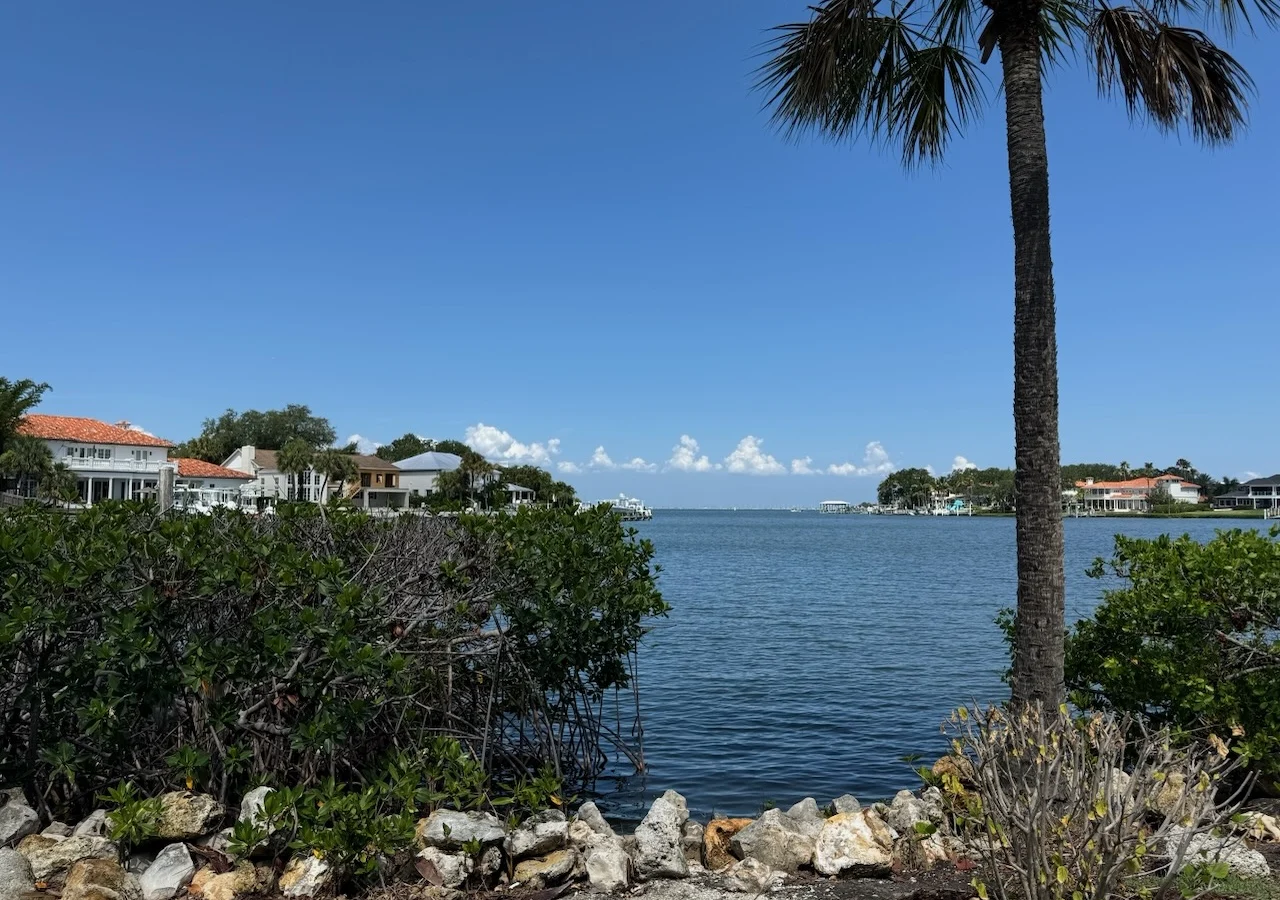
Two homes on the same street can have very different water. One faces open bay with long views and more wind. The next sits on a protected canal with a deep dock but a fixed bridge between it and the bay. In Tampa Bay, the type of water, the route to open water, and the elevation of the house drive value as much as the house itself. This guide explains the types of waterfront, where to find them, and what Shane Vanderson checks before a client makes an offer.
| Fact | Value |
|---|---|
| Active waterfront listings, Tampa Bay | [MLS: count] |
| Median sold price, trailing 12 months | [MLS: $] |
| Median days on market | [MLS: days] |
| Share of waterfront sales with a dock or boat lift | [MLS: %] |
Types of waterfront
- Open bay. Wide views and direct boat access. More exposure to wind and storm surge.
- Canal and bayou. Protected water for docks and lifts. Depth, width, and bridges on the route to the bay set the size of boat you can keep.
- River. Calmer water and tree cover along the Hillsborough River. Boat access depends on bridges and depth.
- Gulf beach. Sand and sunsets on the barrier islands. Construction rules seaward of the coastal construction control line add steps.
For more detail, read open bay, canal, or river.
Where to find waterfront homes
South Tampa and Downtown
Davis Islands, Culbreath Isles, Bayshore Beautiful, Sunset Park, Beach Park, Ballast Point, Westshore Yacht Club, and Harbour Island. Culbreath Isles was largely dredged from the shallows of the bay, so most of its lots face canals.
St. Petersburg
Snell Isle, Venetian Isles, Shore Acres, and the bayfront blocks of the Old Northeast. For a comparison across the bay, read Culbreath Isles vs. Venetian Isles.
Clearwater and the beaches
Island Estates in Clearwater, plus Clearwater Beach, Belleair Beach, Indian Rocks Beach, Madeira Beach, Treasure Island, and St. Pete Beach.
What to check before you buy
- Depth and route. Confirm water depth at low tide at the dock and along the route to open water. Measure clearance under every fixed bridge on that route.
- Seawall, dock, and lift. Get the age, permits, and condition of each. A seawall repair can cost more than a new kitchen. See seawall inspections and costs and buying a dock or boat slip.
- Flood zone and elevation. Ask for the elevation certificate and compare the finished floor to the base flood elevation. See how to read a flood zone.
- The FEMA 50% rule. In a Special Flood Hazard Area, if repairs or improvements cost 50% or more of the building’s market value, the whole building must meet current flood rules. This affects renovation plans on older, lower homes. See the FEMA 50% rule.
- Flood disclosure. Florida Statute 689.302 requires the seller to give a flood disclosure at or before contract. Since October 1, 2025, it also covers flood damage the seller knows about during ownership. See Florida flood disclosure.
- Insurance. Get wind and flood quotes during your inspection period, not after. See waterfront home insurance.
For sellers
Waterfront buyers ask about the elevation certificate, the seawall, the flood history, and insurance in the first showing. Shane Vanderson gathers those documents before the listing goes live and prices the home against sales with the same type of water. Start with a home valuation.
To see waterfront homes for sale, call or text Shane at 813-205-5430 or use the contact page.
Frequently asked questions
What is the difference between open-bay and canal waterfront?
Open-bay homes face wide water with long views and direct access, but they take more wind and surge. Canal homes sit on protected water that suits docks and lifts, but depth and bridges on the route to the bay limit boat size.
What must a Florida seller disclose about flooding?
Under Florida Statute 689.302, the seller gives a separate flood disclosure at or before contract. It covers flood insurance claims, flood assistance received, and, since October 1, 2025, flood damage the seller knows about during ownership.
What is the FEMA 50% rule?
In a Special Flood Hazard Area, if the cost to repair or improve a building equals or exceeds 50% of its market value, the building must be brought up to current flood rules. That often means elevating the home or rebuilding it.
Do all waterfront homes need flood insurance?
Lenders require flood insurance on homes in high-risk zones, which start with A or V, when the loan is federally backed. Outside those zones it is not always required, but most waterfront buyers still get a quote and buy coverage.