
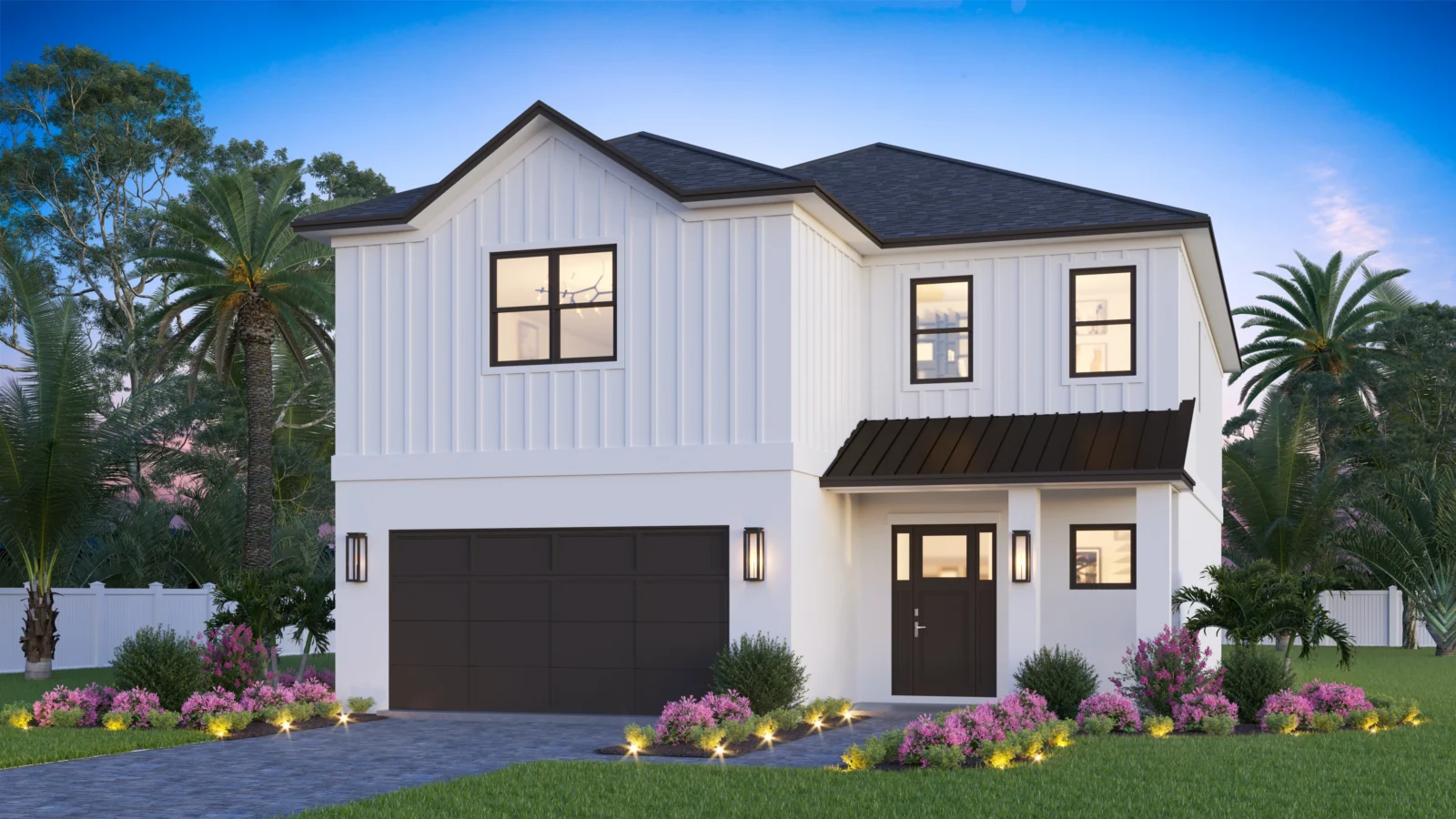
In South Tampa, much of the new construction goes up on a lot where an older house once stood. In north Tampa and the suburbs, builders sell homes in planned communities. Downtown, buyers sign contracts for condos that are years from completion. Each path has its own contract, deposit, and risk. This guide explains the options and what Shane Vanderson reviews before a client commits.
| Fact | Value |
|---|---|
| New construction sales, trailing 12 months | [MLS: count] |
| Median sold price | [MLS: $] |
| Median sold price per square foot | [MLS: $/sq ft] |
| Active new construction listings | [MLS: count] |
Where new homes are built
Infill lots in South Tampa and St. Petersburg
Builders buy older homes, take them down, and build new. This is common in Sunset Park, Beach Park, Palma Ceia, Bayshore Beautiful, and Davis Islands, and on waterfront lots on Snell Isle. Read buying a South Tampa teardown lot and renovate or tear down.
Planned communities
North of the city, in areas such as New Tampa and Westchase, and farther out in Lutz and Odessa, builders sell homes in communities with shared amenities. Many of these communities carry HOA dues, and some carry a CDD assessment.
Beach rebuilds
On the Tampa Bay beaches, many new homes replace lower, older homes. New homes there must meet current elevation rules, and many sit over parking.
Pre-construction condos
Downtown Tampa and Downtown St. Petersburg have towers that sell before they open. See the high-rise condo guide and pre-construction condo deposits.
Custom, spec, or production
- Custom. You own or buy the lot and hire a builder to build your plan.
- Spec. A builder builds a home without a buyer and sells it during or after construction. You can sometimes choose finishes if you buy early.
- Production. A builder sells set plans and option packages in a community.
Read tract vs. spec vs. custom builders for more.
What to check before you sign
- The contract. Builder contracts are written by the builder. Check deposit amounts, where deposits are held, change-order pricing, completion dates, and your right to walk away. See luxury new construction contracts.
- The builder’s license. Confirm the contractor license with the Florida Department of Business and Professional Regulation.
- Permits and inspections. Confirm all permits close and the home gets a certificate of occupancy. Hire your own inspector for the pre-drywall and final stages.
- Elevation. In a flood zone, ask for the elevation certificate. Compare the finished floor to the base flood elevation. See how to read a flood zone.
- Historic districts. In Tampa’s local historic districts, such as Hyde Park, new construction needs a Certificate of Appropriateness from the Architectural Review Commission. St. Petersburg has a similar process.
- Financing. A custom build often uses a construction loan. See financing a custom build.
- Warranty. Get the warranty terms in writing, including who handles claims and for how long.
For owners of older homes
In many South Tampa neighborhoods, builders pay for the land. If your home is older, its value may depend more on the lot than on the house. Shane Vanderson prices both ways, as a home and as a lot, so you can see which buyer pool pays more. Start with a home valuation.
To see new construction for sale or to talk about a build, call or text Shane at 813-205-5430 or use the contact page.
Frequently asked questions
Do I need my own agent to buy new construction?
It is not required, but the builder’s sales staff work for the builder. Your own agent reviews the contract, deposits, and upgrade pricing for you. Some builders require your agent to register you on your first visit, so ask about the builder’s policy before you go.
What is the difference between a spec home and a custom home?
A spec home is built by the builder before a buyer signs, then sold. A custom home is built for a specific owner to that owner’s plan, usually on a lot the owner controls.
Can I build a new home in a historic district?
Yes, with design review. In Tampa, the Architectural Review Commission issues Certificates of Appropriateness for new construction in local districts such as Hyde Park. St. Petersburg requires a Certificate of Appropriateness in its local districts. See buying a historic home in South Tampa.
Why are many new homes near the water built high?
New homes in a Special Flood Hazard Area must put the lowest floor at or above the elevation that local flood rules require. Older homes nearby often sit lower because they were built under earlier rules.