Where to Buy in Tampa Bay in 2026: Downtown Tampa vs. St. Petersburg vs. Suburbs—Buyer’s Market Breakdown
Where should you buy in Tampa Bay in 2026—Downtown Tampa, Downtown St. Petersburg, or the suburbs—and how do you decide based on lifestyle, value, and timing?
Tampa Bay’s 2026 buyer’s market favors well-prepared buyers: choose Downtown Tampa for job access and new towers, St. Petersburg for walkability and arts, or suburbs for space and schools—then match that to your timeline and risk tolerance.
Introduction
If you’re relocating or moving up within Tampa Bay, 2026 feels different. Inventory is deeper, sellers are more flexible, and you have time to evaluate neighborhoods—not just jump at the first listing. For affluent buyers and sellers, professional athletes, and developers, this is a strategic window: you can compare lifestyle tradeoffs, analyze value per square foot, and negotiate terms that were difficult in prior cycles.
The big question isn’t just “Where should I buy?” It’s “Which submarket aligns with how you’ll actually live—and what gives you leverage today?” Downtown Tampa, Downtown St. Petersburg, and the suburbs each offer distinct advantages. Your best choice depends on your daily routine, privacy preferences, tax strategy, and how long you expect to hold the asset.
Below is a clear, practical breakdown designed to reduce uncertainty early in your search.
1) Downtown Tampa: Career Proximity, New Towers, and a City-First Lifestyle
If you want direct access to major employers, pro sports venues, and an increasingly urban lifestyle, Downtown Tampa is your most efficient play. The area continues to add high-rise inventory, including newer construction along Water Street and adjacent pockets like Harbour Island. That means more choices in 2026—especially for high-rise condos and townhome-style residences.
Why it works for you:
- You can walk or short-ride to offices, arenas, restaurants, and the Riverwalk.
- Newer towers often include full-service amenities, which is ideal if you travel or value lock-and-leave convenience.
- Rental demand tends to be more consistent near job centers, which can help if you’re thinking about part-time occupancy.
What to watch in 2026:
- Condos often have higher HOA fees; weigh monthly costs against location and maintenance relief.
- In newer developments, review reserve funding, special assessment history, and flood insurance requirements.
- If you’re comparing units, value is usually driven by view lines, floor height, and walkability to the Riverwalk or Water Street.
Example comparison:
A high-rise condo near Water Street may offer streamlined ownership and walkability but less privacy than a single-family option in South Tampa or Sunset Park. If your priority is convenience and a modern lifestyle, Downtown Tampa makes sense. If you want a yard, guest space, or a detached garage, you may prefer adjacent neighborhoods like Hyde Park, Harbour Island, or Davis Islands.
2) Downtown St. Petersburg: Walkability, Arts, and Waterfront Value
Downtown St. Petersburg continues to attract buyers who want a coastal feel without giving up an urban core. You get a dense, walkable grid, a strong arts scene, and a more relaxed vibe compared with Downtown Tampa. In 2026, inventory shifts in St. Pete may give you more negotiating room, especially in mid- to high-rise buildings near Beach Drive.
Why it works for you:
- The city’s waterfront parks and marina lifestyle are a real daily benefit.
- Condos range from historic mid-rise units to newer towers, giving you multiple pricing tiers.
- St. Petersburg often feels less congested and more pedestrian-friendly.
What to watch in 2026:
- Some older buildings have stricter rental rules or deferred maintenance; ask about assessments and upcoming capital projects.
- If you want direct beach access, consider adjacent areas like Clearwater or the Gulf beaches, but note the tradeoff in commute time.
- Parking and storage are premium factors in downtown St. Pete—confirm what’s deeded versus common.
Example comparison:
A condo in Downtown St. Petersburg can deliver waterfront proximity and cultural amenities at a price point that sometimes undercuts comparable Downtown Tampa inventory. However, if your work or travel requires more frequent access to Tampa International Airport, Downtown Tampa may be more practical. If you want a blended lifestyle with beaches and city energy, St. Pete is a compelling middle ground.
3) Suburbs and Coastal Pockets: Space, Schools, and Lifestyle Control
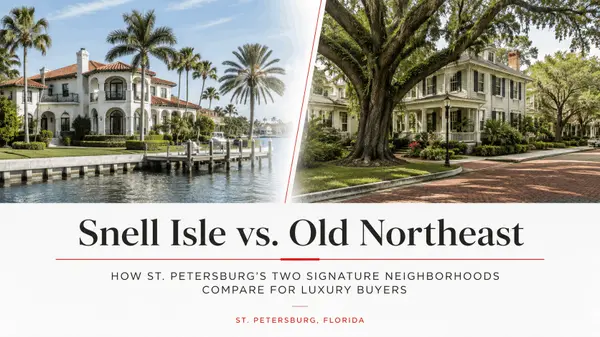
If you prioritize privacy, larger lots, or top-rated schools, the suburbs—and select coastal enclaves—remain a powerful choice. Areas like Westchase, Odessa, Lutz, and Safety Harbor offer space and a quieter daily rhythm. Meanwhile, waterfront-oriented neighborhoods such as Snell Isles, Sunset Park, and parts of South Tampa provide prestige, boat access, and classic architecture.
Why it works for you:
- You gain square footage, outdoor space, and more flexible floorplans.
- Certain school zones and neighborhood reputations drive long-term stability.
- You can find newer builds or custom homes with modern layouts.
What to watch in 2026:
- Single-family inventory can be more competitive in “A+” pockets, even in a softer market.
- Flood zones and insurance requirements vary significantly by street—factor this into total cost.
- Commute and traffic patterns matter; test your drive time during peak hours.
Example comparison:
If you’re deciding between a high-rise in Downtown Tampa and a waterfront home in Snell Isles, ask yourself how often you’ll use the water and outdoor space. If you’re in a phase where entertaining, outdoor living, or boat access are priorities, a single-family home near the water may be the better fit. If you’re traveling frequently or want a lower-maintenance property, a condo could be smarter.
Quick suburb snapshot for 2026 buyers:
- Westchase: Master-planned feel, strong schools, and a suburban lifestyle with nearby retail.
- Odessa & Lutz: Larger lots, newer builds, and a more private setting.
- Safety Harbor: Charm, walkability, and proximity to Clearwater and the bay.
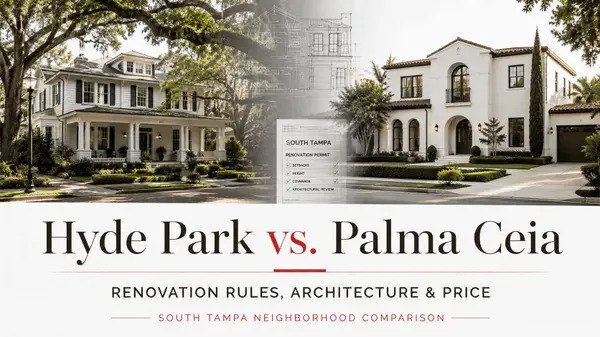
- South Tampa & Sunset Park: Classic architecture, close to top schools and the city, but higher land values.
4) How to Decide: A Buyer’s Market Playbook for 2026
With a more balanced market, you can apply a decision framework rather than making rushed compromises. Your goal is to match your lifestyle to a submarket and then use market conditions to negotiate.
Step 1: Identify your daily priorities
Ask yourself:
- Do you want walkability or privacy?
- Is a yard and garage essential?
- How often do you travel, and do you need lock-and-leave convenience?
Step 2: Compare total ownership costs
In a buyer’s market, purchase price isn’t the only variable. Consider:
- HOA dues and future assessments (for condos)
- Insurance costs in waterfront or flood zones
- Renovation budgets for older homes in established neighborhoods
Step 3: Use inventory to your advantage
Because selection is broader in 2026, you can:
- Negotiate repair credits or price adjustments
- Request longer inspection windows
- Compare multiple properties within the same micro-neighborhood
Step 4: Think in 5–7 year terms
Even if your move is immediate, Tampa Bay real estate still rewards a medium-term hold. If your plan is short-term, prioritize properties with easy resale appeal:
- Strong school zones
- Walkable amenities
- Updated systems and roof age
Example decision:
If you’re a professional athlete or travel-heavy executive, you might choose a Downtown Tampa or Downtown St. Pete high-rise for convenience and low maintenance. If you’re building a long-term base with family considerations, South Tampa, Sunset Park, or Westchase might provide the space and school access you need.
FAQ
- Is 2026 a good time to buy in Tampa Bay?
- Yes, 2026 is expected to be more buyer-friendly than recent years. You’ll see more inventory, less bidding pressure, and greater negotiation leverage—especially in condos and newer developments.
- How do I compare Downtown Tampa and Downtown St. Petersburg values?
- Start with lifestyle alignment, then compare total monthly costs (HOA, insurance, parking). Downtown Tampa often commands a premium for business access, while St. Pete may offer better walkability and waterfront proximity at a comparable price point.
- Should I buy a high-rise condo or a single-family home in 2026?
- If you want lock-and-leave simplicity, a high-rise can be ideal. If you need space, privacy, or outdoor living, a single-family home in South Tampa, Snell Isles, or the suburbs may be better. Your decision should hinge on daily use, not just pricing.
Closing
In 2026, Tampa Bay gives you more choice and more leverage—if you approach it with a plan. Downtown Tampa offers a city-first lifestyle and access to employers. Downtown St. Petersburg blends walkability with waterfront energy. The suburbs and coastal neighborhoods deliver space, privacy, and long-term stability. The right decision is the one that fits how you’ll live, how long you’ll hold, and where you see the most personal value.
If you want a clearer short list based on your timeline and priorities, I can help you compare specific neighborhoods, building types, and deal structures without pressure—just a strategic, data-informed path forward.
Categories
- All Blogs (186)
- 345 Bayshore (4)
- 400 Central (2)
- Apollo Beach (25)
- Arbor Greene (6)
- Avila (37)
- Ballast Point (15)
- Bayshore Beautiful (15)
- Beach Park (48)
- Bel Mar Gardens (7)
- Belleair Beach (9)
- Brandon (14)
- Carrollwood (36)
- Channel District (10)
- Cheval (21)
- Clearwater (50)
- Clearwater Beach (27)
- Cordoba Ranch (6)
- Cory Lake Isles (5)
- Culbreath Isles (27)
- Davis Islands (56)
- Downtown St Petersburg (29)
- Downtown Tampa (56)
- Golfview (20)
- Grand Central at Kennedy (2)
- Gulf Beaches (17)
- Harbour Island (57)
- Hillsborough (2)
- Home Buying (49)
- Home Improvement (6)
- Home Selling (58)
- Hotel ORA (3)
- Hunters Green (14)
- Hyde Park (49)
- Hyde Park House (3)
- Indian Rocks Beach (15)
- Ladera (9)
- Lakewood Ranch (7)
- lutz (45)
- Luxury Homes (32)
- Madeira Beach (35)
- Marina Pointe (21)
- New Suburb Beautiful (7)
- New Tampa (15)
- Odessa (38)
- Old Northeast (10)
- ONE St. Petersburg (4)
- ONE Tampa (6)
- Palma Ceia (18)
- Parkland Estates (8)
- Pasco (1)
- Pendry Tampa (9)
- Pinellas Condos (13)
- Plaza Harbour Island (4)
- Professional Athlete Advisory (4)
- Reviews (2)
- Ritz-Carlton Tampa (16)
- Riverview (27)
- Safety Harbor (7)
- Saltaire (4)
- Seminole Heights (26)
- Skypoint (4)
- Snell Isle (31)
- South Tampa (105)
- St Pete Beach (30)
- St Petersburg (73)
- Sunset Park (40)
- Tampa (94)
- Tampa Bay New Construction (7)
- Tampa Bay Real Estate (32)
- Tampa Bay Waterfront (8)
- Tampa Condos (16)
- Tampa Edition (7)
- Tampa Palms (20)
- The Nolen (2)
- The Place Channelside (2)
- Tierra Verde (22)
- Treasure Island (13)
- Venetian Isles (25)
- Viceroy Clearwater Beach (3)
- Virginia Park (18)
- Waldorf Astoria St Petersburg (4)
- Water Street (18)
- Waterleaf (4)
- Westchase (36)
- Westshore Marina District (23)
- Westshore Yacht Club (6)
- Ybor (8)
Recent Posts