Best Neighborhoods in Tampa: How to Choose the Right One for Your Move
What is the best neighborhood in Tampa?
There isn’t one. Tampa’s neighborhoods differ on five structural variables — housing stock era, water access, elevation and flood zone, commute geography, and renovation restrictions. The right neighborhood is the one whose variables match your constraints.
Every “best neighborhoods” article ranks places. That’s the wrong output, because a neighborhood that works perfectly for a buyer who wants a turnkey high-rise and a five-minute commute is the wrong answer for a buyer who wants a half-acre lot and a boat lift.
What’s actually useful is knowing what varies. Tampa’s neighborhoods differ from each other in specific, checkable ways — the decade the housing stock was built, whether the water behind the lot is navigable, whether the parcel sits in a flood zone that limits renovation, and whether a review board has to approve your paint color.
Sort on those, and the list narrows itself.
The Four Housing-Stock Profiles in Tampa
Nearly every Tampa neighborhood falls into one of four categories. This is the first and largest fork in the road, because it determines your renovation scope, your insurance picture, and your maintenance budget for the next decade.
The Historic Bungalow Core
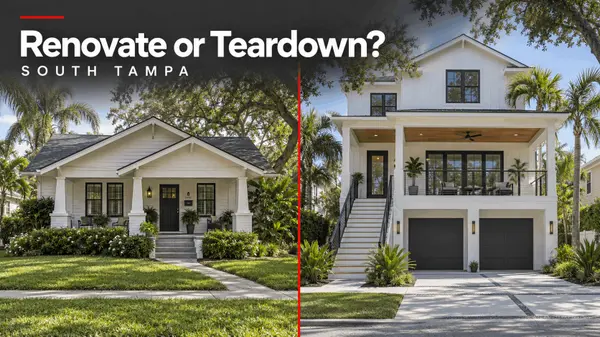
Hyde Park, Palma Ceia, Seminole Heights, Ybor City, and West Tampa share a common origin: they were platted and largely built between roughly 1900 and 1940. The housing stock is bungalows, Colonial Revival, and Mediterranean Revival, on relatively compact lots with mature canopy and sidewalks.
What that means practically: original wiring, plumbing, and foundation systems, unless a previous owner already addressed them. Charm and deferred capital expense arrive in the same package. Renovation costs here run higher per square foot than newer construction, and in the designated historic districts, exterior work goes through architectural review.
The Waterfront Peninsula
Beach Park, Sunset Park, Culbreath Isles, Davis Islands, Ballast Point, and Harbour Island carry Tampa’s waterfront inventory. Housing stock is mixed — 1920s originals, mid-century ranches, and a growing share of new construction on teardown lots.
The defining variable is not “waterfront” but what kind. Direct bay frontage, deep navigable canal, shallow canal, and water view without dockage are four distinct price tiers and four distinct lifestyles. Bridge clearance and channel depth vary block to block, so if a boat is part of the plan, verify before you fall in love with the house.
The Urban High-Rise Corridor
Downtown Tampa, the Channel District, Water Street, and Harbour Island hold the condominium and high-rise product. Most of it is post-2000, with a concentration of very recent delivery.
This is the lowest-maintenance path into Tampa and the one with the most predictable monthly cost — though “predictable” means the HOA fee is known, not that it’s low. Reserve studies, milestone inspection status, and assessment history matter more here than in any other segment, and Florida’s condo legislation has made them non-negotiable diligence items.
The Northern and Western Master-Planned Communities
Westchase, Carrollwood, Tampa Palms, New Tampa, Hunters Green, and Avila sit outside the urban core. Housing stock is mostly 1980s through present, on larger lots, in communities with HOA governance and often a Community Development District.
The CDD piece catches people. It’s a separate assessment from the HOA, it appears on the property tax bill rather than a monthly statement, and it can run to meaningful annual figures. Ask for the number before you write an offer — it changes the affordability math more than most buyers expect.
The Five Variables That Actually Sort Tampa Neighborhoods
1. Commute Geography
Tampa’s road network funnels through a small number of crossings, so distance and drive time correlate loosely at best. A South Tampa address five miles from downtown can take longer at rush hour than a suburban address fifteen miles out on a different corridor.
If commute matters, drive the actual route at the actual hour before you commit. This is the single most common regret among buyers relocating from out of state.
2. Water Access — and What Kind
Covered above, but worth isolating as a decision variable. Water frontage, water view, water access by community dock, and no water at all are four different products at four different price points. Being specific about which one you need eliminates entire neighborhoods immediately.
3. Elevation and Flood Zone
This drives insurance cost, financing options, and — through the FEMA 50% rule — how much you’re legally permitted to improve an older home before you’re required to bring the whole structure up to current code.
Two houses on the same street in the same flood zone can carry very different premiums depending on finished floor elevation. Our flood zone guide covers reading a BFE and an elevation certificate, and the FEMA 50% rule breakdownexplains the renovation cap.
4. The Restriction Layer
Three separate systems can constrain what you build:
- Historic district review. Portions of Hyde Park, Ybor City, and Seminole Heights fall within designated districts where exterior alterations require approval. Verify the specific parcel — boundaries are irregular and a street can be split down the middle.
- HOA deed restrictions. Beach Park, Culbreath Isles, and most master-planned communities carry recorded restrictions on setbacks, height, materials, and sometimes landscaping.
- Flood zone limits. The FEMA 50% rule applies regardless of neighborhood and overrides your renovation plans if the numbers land wrong.
Buyers planning significant work should confirm all three before contract, not during inspection.
5. Walkability
Tampa is not uniformly walkable, and the difference is infrastructural rather than aesthetic. Continuous sidewalks, a mixed-use destination within walking distance, and street grids that don’t dead-end into arterials are what separate a genuinely walkable neighborhood from one that just has nice trees.
Hyde Park, with Hyde Park Village and the Bayshore Boulevard waterfront sidewalk, and the downtown high-rise corridor score highest on this. Most of the master-planned communities to the north are designed around driving, with internal trail systems rather than street-level walkability.
Frequently Asked Questions
What is the best neighborhood in Tampa for a homebuyer?
The right neighborhood depends on your specific requirements — housing stock era, water access, commute route, renovation plans, and budget. Tampa’s neighborhoods differ structurally rather than in quality, so the productive approach is to identify your non-negotiables first and let those eliminate options.
Which Tampa neighborhoods have the oldest housing stock?
Hyde Park, Palma Ceia, Ybor City, West Tampa, and Seminole Heights were largely built between 1900 and 1940. Expect original building systems unless a prior owner has updated them, and check whether the specific parcel falls within a historic district that requires review for exterior work.
Do all Tampa waterfront neighborhoods have boat access?
No. Water frontage doesn’t guarantee usable boat access — channel depth, bridge clearance, and seawall condition vary considerably, sometimes within a single neighborhood. If boating is a requirement, verify draft and clearance for the specific address rather than the neighborhood.
What is a CDD fee and which Tampa neighborhoods have them?
A Community Development District assessment funds infrastructure in master-planned communities and appears on the annual property tax bill, separate from any HOA dues. Several communities in the New Tampa, Westchase, and Tampa Palms areas carry them. Request the current figure before making an offer.
How do I find school attendance boundaries in Tampa?
Hillsborough County Public Schools maintains the official attendance-zone lookup, and boundaries are subject to change. Verify any address directly with the district rather than relying on third-party listing data, which is frequently outdated.
Shane Vanderson is a License Partner and Broker Associate with Engel & Völkers South Tampa, specializing in luxury and waterfront properties throughout South Tampa, Davis Islands, and Harbour Island. If you’re narrowing between two or three Tampa neighborhoods and want a structural comparison — housing stock, flood exposure, and what your budget actually buys in each — visit shanevanderson.com or call or text 813-205-5430.
Categories
- All Blogs (209)
- 345 Bayshore (4)
- 400 Central (3)
- Apollo Beach (24)
- Arbor Greene (6)
- Art House (1)
- Avila (37)
- Ballast Point (16)
- Bayshore Beautiful (15)
- Beach Park (48)
- Bel Mar Gardens (7)
- Belleair Beach (8)
- Brandon (15)
- Carrollwood (35)
- Channel District (7)
- Cheval (22)
- Clearwater (50)
- Clearwater Beach (26)
- Cordoba Ranch (6)
- Cory Lake Isles (5)
- Culbreath Isles (26)
- Davis Islands (55)
- Downtown St Petersburg (29)
- Downtown Tampa (53)
- Golfview (20)
- Grand Central at Kennedy (2)
- Gulf Beaches (23)
- Harbour Island (52)
- Hillsborough (2)
- Home Buying (71)
- Home Improvement (6)
- Home Selling (71)
- Hotel ORA (2)
- Hunters Green (13)
- Hyde Park (48)
- Hyde Park House (3)
- Indian Rocks Beach (14)
- Ladera (8)
- Lakewood Ranch (7)
- lutz (43)
- Luxury Homes (40)
- Madeira Beach (32)
- Marina Pointe (20)
- New Suburb Beautiful (7)
- New Tampa (15)
- Odessa (37)
- Old Northeast (11)
- ONE St. Petersburg (5)
- ONE Tampa (5)
- Palma Ceia (20)
- Parkland Estates (8)
- Pasco (1)
- Pendry Tampa (10)
- Pinellas Condos (15)
- Plaza Harbour Island (5)
- Professional Athlete Advisory (3)
- Reviews (2)
- Ritz-Carlton Tampa (16)
- Riverview (26)
- Safety Harbor (7)
- Saltaire (5)
- Seminole Heights (23)
- Skypoint (6)
- Snell Isle (30)
- South Tampa (105)
- St Pete Beach (29)
- St Petersburg (74)
- Sunset Park (40)
- Tampa (94)
- Tampa Bay New Construction (7)
- Tampa Bay Real Estate (27)
- Tampa Bay Waterfront (8)
- Tampa Condos (20)
- Tampa Edition (8)
- Tampa Palms (17)
- The Nolen (2)
- The Place Channelside (2)
- Tierra Verde (21)
- Treasure Island (13)
- Venetian Isles (24)
- Viceroy Clearwater Beach (3)
- Virginia Park (19)
- Waldorf Astoria St Petersburg (4)
- Water Street (17)
- Waterleaf (4)
- Westchase (33)
- Westshore Marina District (21)
- Westshore Yacht Club (5)
- Ybor (8)
Recent Posts