Buying a Historic Home in South Tampa: How the Architectural Review Commission, Certificates of Appropriateness, and the Historic Tax Exemption Actually Work
Do you need approval to renovate a historic home in South Tampa?
Yes — if the home sits in one of Tampa's four local historic districts (Hyde Park, Seminole Heights, Tampa Heights, or Ybor/Barrio Latino) or is a designated local landmark. Exterior changes visible from the public right-of-way, additions, new construction, and demolition require a Certificate of Appropriateness from the city's Architectural Review Commission, reviewed against the Secretary of the Interior's Standards for Rehabilitation. Interior work and routine like-for-like maintenance generally don't. A locally designated home can also qualify for a property tax exemption on the added value of an approved rehabilitation for up to 10 years.
A century-old bungalow on a brick street in Hyde Park, a Craftsman in Tampa Heights, a Mediterranean Revival near Bayshore — the character that makes these homes worth a premium is the same character the city protects. For a buyer, that protection cuts both ways. It keeps a neighbor from dropping a glass box next door, and it puts a review process between you and the exterior renovation you have in mind.
Here's what most buyers don't realize until they're under contract: the designation that actually governs what you can change is the local one, not the National Register listing everyone talks about. Getting that distinction right is the difference between a smooth renovation and a stalled one.
Local designation versus the National Register — only one restricts you
These two get used interchangeably, and they shouldn't be.
Local historic designation carries the regulatory teeth. Tampa has four locally designated historic districts — Hyde Park, Seminole Heights, Tampa Heights, and Ybor City (the Barrio Latino district) — plus dozens of individually designated local landmarks across the city. Exterior changes to a contributing property inside those boundaries go through a review process before you can pull a permit.
National Register listing is largely honorary. It recognizes historic significance and, for income-producing buildings, opens the door to a federal rehabilitation tax credit. On its own, it does not restrict what a private homeowner does to the exterior. Many Tampa districts — Hyde Park among them — are both locally designated and National Register listed, which is where the confusion starts.
So your first due-diligence question on any older South Tampa home isn't “is it historic.” It's two questions: Is this parcel inside a local historic district, and is the structure classified as contributing or a designated landmark? A non-contributing house inside a district, or an older home outside any district boundary, lives under very different rules. The City of Tampa's historic preservation staff and the public district maps will confirm both before you write an offer.
What a Certificate of Appropriateness covers — and what it doesn't
If your home is locally designated, exterior work runs through a Certificate of Appropriateness (COA) issued by the Architectural Review Commission (ARC) — or the Barrio Latino Commission for Ybor properties. The commission measures projects against the Secretary of the Interior's Standards for Rehabilitation and the district's own design guidelines.
Work that typically needs a COA includes:
- Additions, second stories, and new accessory structures
- Replacement windows, doors, siding, and roofing where the material or appearance changes
- Front porches, railings, columns, and other street-facing architectural features
- Fences, walls, driveways, and significant landscape changes in the front yard
- Demolition, in whole or in part
Work that generally doesn't trigger review includes interior renovations that don't change the exterior, and ordinary maintenance or in-kind repairs that replace a feature with the same material and design. Painting and routine upkeep usually fall outside the process, though it's worth confirming scope before you start.
Not every COA goes to a public hearing. Minor, clearly compliant work can often be approved administratively by preservation staff, which is fast. Larger or more visible projects — additions, new construction, demolition — go to the full commission on its hearing calendar. Applications run through the city's online portal, and the historic preservation office will tell you which track your project lands on before you invest in drawings.
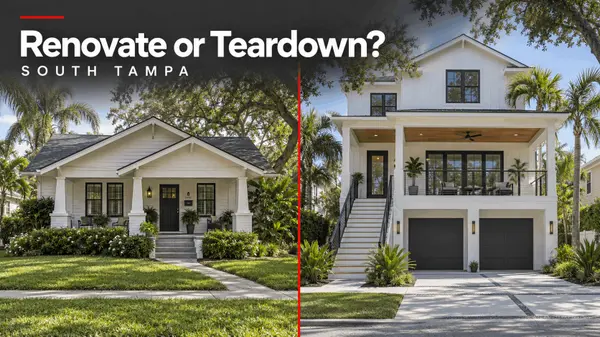
The piece buyers underestimate most is demolition. Tearing down a contributing structure in a local district isn't a clerical step; it's a reviewed action, and approval is far from guaranteed. If your plan is to buy an older home, remove it, and build new, the district designation changes that math entirely. That's a different exercise from buying a teardown lot on a South Tampa block without those constraints, and it belongs in your analysis before, not after, you close.
The historic tax exemption that can offset a renovation
Here's the part that works in your favor. Florida lets local governments offer a property tax exemption for rehabilitating historic properties, and the City of Tampa adopted exactly that — Ordinance 93-137, on the books since 1993, under the authority of Florida Statutes 196.1997 and 196.1998.
The mechanics are worth understanding because they're frequently misread:
- The exemption applies to the increase in assessed value created by an approved rehabilitation — not your entire tax bill. Your base assessed value keeps getting taxed; the added value from a qualifying renovation is what gets shielded.
- It can run for up to 10 years.
- In Tampa, it applies to the city and Hillsborough County portions of the ad valorem tax that those bodies have agreed to exempt — not every line on the bill (school and certain other levies aren't covered). Confirm the current split with the city, since the program applies only to the taxing authority granting it.
- The property must be a local landmark or a contributing structure in a local historic district (the statute also reaches National Register–listed and contributing properties).
- There's a minimum investment of $10,000 in qualifying improvements.
The application is two parts: a pre-rehabilitation review of eligibility and proposed work, and a post-rehabilitation review of what you actually built, both evaluated by the ARC or Barrio Latino Commission at public hearing against the Secretary of the Interior's Standards. In practice, that means the same review that governs your COA also governs whether the work qualifies for the exemption — so it pays to align the two from the start.
One common question: what about the federal 20% historic tax credit? That credit is reserved for income-producing certified historic structures — think a rehabilitated commercial building or a rental — and generally doesn't apply to an owner-occupied home. Florida has no separate state historic tax credit. For a primary residence, the local ad valorem exemption is the meaningful lever, which is why it belongs in your renovation budget conversation rather than as an afterthought.
What this means before you write an offer
A historic home is a strong long-term hold in South Tampa, and the protections are part of why these blocks keep their value. The work is in front-loading the homework. A practical sequence:
- Confirm the designation. Verify whether the parcel is in a local historic district and whether the structure is contributing or a landmark — not just whether it's “old” or National Register listed.
- Pre-test your renovation scope. If you plan additions, window replacements, a reroof with a different material, or anything street-facing, walk the concept past preservation staff before closing. Early feedback is free.
- Build the review timeline into your plan. Administrative approvals move quickly; full ARC hearings run on a published calendar. Sequence your contractor and financing around it.
- Don't ignore the older-home insurance reality. Designation doesn't exempt you from a Florida 4-point inspection or wind-mitigation review, and a reroof still has to satisfy both your carrier and the ARC where materials are visible.
- Map the tax exemption against your renovation budget. If you're planning a substantial rehab, the 10-year exemption on the added value can change the after-tax cost meaningfully.
Pricing an offer on a designated home also means reading the local market with that premium in mind — what Hyde Park homes are actually trading for today reflects the protections as much as the architecture. And once you own it, how your first Florida property tax bill gets calculated interacts directly with any exemption you pursue.
Frequently Asked Questions
Do I need permission to renovate a historic home in Hyde Park?
For exterior work — additions, window or siding replacement, roofing changes, front-yard features, or demolition — yes. Those require a Certificate of Appropriateness from the Architectural Review Commission, reviewed against the Secretary of the Interior's Standards and the Hyde Park design guidelines. Interior renovations and like-for-like maintenance generally don't need review.
Can I tear down a historic home in South Tampa and build new?
Not freely. Demolition of a contributing structure in a local historic district is a reviewed action, and approval isn't guaranteed. If your plan is to remove an older home and rebuild, confirm the parcel's designation and contributing status first — it materially changes whether the project is feasible.
Does living in a historic district lower my property taxes?
It can, if you renovate. Tampa's historic tax exemption shields the increase in assessed value created by an approved rehabilitation — not your whole bill — for up to 10 years, on a contributing or landmark property with at least $10,000 in qualifying improvements. The base assessed value is still taxed normally.
Is a National Register home the same as a locally designated one?
No. National Register listing is mostly recognition and, for income-producing buildings, federal tax-credit eligibility — it doesn't restrict a private owner's exterior changes by itself. Local designation is what triggers the Certificate of Appropriateness process. Many Tampa homes carry both, so confirm the local status specifically.
If you're considering a historic home in Hyde Park, Tampa Heights, or anywhere across South Tampa — or weighing a renovation against the review process and the tax exemption — a direct conversation usually clears more up than another search.
This article is general information for Tampa Bay buyers and sellers, not legal, tax, or design-review advice. Verify district boundaries, contributing status, permit requirements, and exemption eligibility with the City of Tampa's Architectural Review and Historic Preservation office and your own advisors before acting. Equal Housing Opportunity.
About Shane Vanderson
Shane Vanderson is a License Partner and Broker Associate with Engel & Völkers South Tampa, licensed in Florida since 2012 and representing buyers and sellers across Tampa Bay's high-end market. He specializes in South Tampa, Harbour Island, Hyde Park, Davis Islands, Downtown Tampa waterfront, and luxury condominiums, and holds membership in Engel & Völkers' Professional Athlete Advisory. Connect with Shane at shanevanderson.com or 813-205-5430.
Categories
- All Blogs (205)
- 345 Bayshore (4)
- 400 Central (3)
- Apollo Beach (24)
- Arbor Greene (6)
- Art House (1)
- Avila (36)
- Ballast Point (16)
- Bayshore Beautiful (15)
- Beach Park (48)
- Bel Mar Gardens (7)
- Belleair Beach (8)
- Brandon (15)
- Carrollwood (34)
- Channel District (7)
- Cheval (21)
- Clearwater (50)
- Clearwater Beach (25)
- Cordoba Ranch (6)
- Cory Lake Isles (5)
- Culbreath Isles (26)
- Davis Islands (55)
- Downtown St Petersburg (28)
- Downtown Tampa (51)
- Golfview (20)
- Grand Central at Kennedy (2)
- Gulf Beaches (23)
- Harbour Island (52)
- Hillsborough (2)
- Home Buying (68)
- Home Improvement (6)
- Home Selling (70)
- Hotel ORA (2)
- Hunters Green (13)
- Hyde Park (48)
- Hyde Park House (3)
- Indian Rocks Beach (14)
- Ladera (8)
- Lakewood Ranch (7)
- lutz (43)
- Luxury Homes (38)
- Madeira Beach (32)
- Marina Pointe (19)
- New Suburb Beautiful (7)
- New Tampa (15)
- Odessa (36)
- Old Northeast (11)
- ONE St. Petersburg (5)
- ONE Tampa (5)
- Palma Ceia (19)
- Parkland Estates (8)
- Pasco (1)
- Pendry Tampa (10)
- Pinellas Condos (15)
- Plaza Harbour Island (5)
- Professional Athlete Advisory (3)
- Reviews (2)
- Ritz-Carlton Tampa (16)
- Riverview (26)
- Safety Harbor (7)
- Saltaire (5)
- Seminole Heights (23)
- Skypoint (5)
- Snell Isle (30)
- South Tampa (104)
- St Pete Beach (28)
- St Petersburg (73)
- Sunset Park (40)
- Tampa (92)
- Tampa Bay New Construction (7)
- Tampa Bay Real Estate (27)
- Tampa Bay Waterfront (8)
- Tampa Condos (19)
- Tampa Edition (8)
- Tampa Palms (17)
- The Nolen (2)
- The Place Channelside (2)
- Tierra Verde (21)
- Treasure Island (13)
- Venetian Isles (24)
- Viceroy Clearwater Beach (3)
- Virginia Park (19)
- Waldorf Astoria St Petersburg (4)
- Water Street (17)
- Waterleaf (4)
- Westchase (33)
- Westshore Marina District (21)
- Westshore Yacht Club (5)
- Ybor (8)
Recent Posts