Open Bay, Canal, or River: How to Choose the Right Waterfront Type for a Tampa Bay Luxury Home
What's the difference between open bay, canal, and river waterfront in Tampa Bay?
Open-bay frontage gives you big-water views and direct boating access with the most wind and wave exposure, and it generally commands the highest price per foot of seawall. Canal frontage offers protected dockage and more attainable pricing, with trade-offs in water depth, fixed-bridge clearance, and view. River frontage along the Hillsborough River trades open water for calm conditions and slow-speed boating. The right choice comes down to your boat, your risk tolerance, and how you actually plan to use the water.
Two waterfront homes in Tampa Bay can sit a half mile apart, list in the same price band, and deliver completely different ownership experiences. The difference usually isn't the house. It's the water behind it.
After fourteen years of walking buyers down seawalls from Davis Islands to Tierra Verde, I can tell you the waterfront type — open bay, protected canal, or river — shapes more of the long-term ownership equation than most of the finish-level details buyers fixate on during showings. It determines what boat you can keep, what you'll pay to insure the home, how the property handles a storm season, and how it resells.
Here's how I frame the decision with clients.
Start with the boat, not the house
If boating is part of the plan, the water dictates the shortlist before the house ever enters the conversation. Three constraints matter, and listing photos show none of them.
Depth at low tide. “Deep water” and “sailboat water” appear in listings constantly, and they mean different things to different agents. What matters is the controlling depth — the shallowest point between your dock and open water — at low tide, not at the flattering high-tide moment when you toured. Tampa Bay's tidal swing is modest, but a canal that carries a 30-foot boat comfortably at high tide can leave the same boat sitting in silt a few hours later. Verified depth, not the listing adjective, is what you want in writing.
Fixed bridges. A fixed bridge between your seawall and the bay sets a hard ceiling on vessel height, and no renovation budget changes it. Sailboats and larger sportfish boats need a clear run to open water, which is why interior canal lots behind low bridges and open-access lots on the same street can behave like different markets. Some canal communities — Apollo Beach is a well-known example — were engineered around direct bay access, and their listings trade on it.
Speed zones on the route out. River and bayou frontage often comes with slow-speed, minimum-wake zones along much of the route to open water, including manatee protection zones set by the Florida Fish and Wildlife Conservation Commission, several of which run on seasonal schedules. On parts of the Hillsborough River, locally designated idle-speed and no-wake zones make the trip to the bay a long idle. Some owners love that pace. Serious offshore boaters usually don't.
Dock infrastructure is its own due-diligence lane — lifts, pilings, permits, and what actually conveys at closing. I've covered that separately in what transfers with docks and slips on a Tampa Bay waterfront home.
Exposure, elevation, and what insurers see
The same open water that makes a bayfront lot spectacular is what underwriters price.
Open-bay frontage faces fetch — the uninterrupted distance wind travels over water before it reaches your seawall. More fetch means more wave energy in a storm, which is why FEMA's coastal mapping distinguishes VE zones, where modeled wave heights reach three feet or more during the base flood, from AE zones, where flooding is expected but wave action is lower. Many open-bay parcels around Tampa Bay carry VE or wave-influenced AE designations; interior canal and river parcels more often sit in standard AE. The designation drives the construction standard the home must meet for rebuild and major-renovation plans, and any Special Flood Hazard Area zone triggers a lender's flood insurance requirement. The premium itself, under FEMA's Risk Rating 2.0, reflects property-specific factors — distance to water, elevation, and rebuild cost — rather than the zone letter alone, which is why open-water exposure shows up in the quote either way.
Two cautions from recent seasons. First, protection from waves is not protection from surge: Hurricane Helene in 2024 pushed water into canal neighborhoods across Pinellas County and South Tampa, including streets that had rarely flooded before. A protected canal softens wave damage; it does not opt you out of storm surge. Second, the National Flood Insurance Program caps residential coverage at $250,000 for the building and $100,000 for contents, per FEMA — a fraction of replacement cost at this price point — so estate-caliber waterfront buyers typically layer private excess flood coverage on top. Quote it early, before the inspection period runs, not after.
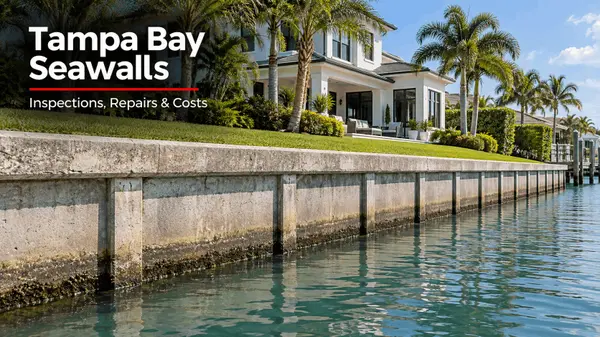
Elevation is the variable that cuts across all three waterfront types. A canal home built at modern elevation can be cheaper to insure than an older open-bay home at grade, and vice versa. The elevation certificate, the seawall's condition, and the home's construction era tell you more about carrying cost than the view does. Seawalls on open-bay lots also absorb more energy over their lifespan, which tends to show up in maintenance cycles — something your inspector and a marine contractor can read during due diligence.
Where each type lives, and how pricing behaves
Tampa Bay's waterfront isn't one market. It's a map of micro-markets sorted largely by water type.
- Open bay: the bayfront rims of Davis Islands, stretches of Snell Isle facing Tampa Bay, Bayshore-adjacent Ballast Point, and Tierra Verde's outer edges, where deep water runs close to the Gulf passes.
- Protected canal: Culbreath Isles, the Sunset Park isles, Shore Acres and Venetian Isles in St. Petersburg (each primarily canal-front, with some open-water edges), and the engineered canal networks of Apollo Beach and MiraBay.
- River and bayou: the Hillsborough River through Riverside Heights and Seminole Heights, and Coffee Pot Bayou along Snell Isle and the Old Northeast.
Pricing follows the water. Open-bay and true deep-water frontage generally carries a premium over interior canal frontage in the same neighborhood, and protected-canal homes generally price above river parcels of comparable size and condition — though the spread varies block by block, and a canal lot with no bridges to the bay can outprice a nearby open-bay lot with a failing seawall. There's no reliable rule of thumb; comparable sales sorted by water type, not just by neighborhood, are how you price these honestly.
Resale behaves differently too. Open-bay homes draw the deepest buyer pool for view-driven purchases, while canal homes with verified depth and open access hold a durable audience of boat owners who shop the water first. You can see what's currently available across the bay on my Tampa waterfront listings page.
One more filter worth naming: how you'll actually use the water, honestly assessed. I ask every waterfront client the same question — is the water for the boat, for the view, or for the resale story? Buyers who answer “view” and buy open bay are consistently happy. Buyers who answer “boat” need the depth-and-bridge audit before anything else. Buyers who answer “resale” should be studying water-type comps, not countertops.
Frequently Asked Questions
Is open-bay frontage always worth more than canal frontage?
Generally, but not automatically. Open-bay and deep-water lots usually command a premium per foot of frontage, yet a protected canal lot with verified depth, no fixed bridges, and a sound seawall can outprice open-bay parcels with exposure problems or aging infrastructure. Water-type comparable sales — not neighborhood averages — settle it.
What does “deep water” actually mean in a Tampa Bay listing?
There's no enforced standard. The number that matters is the controlling depth at low tide along the full route from the dock to open water. Ask for documented depth, check it against your boat's draft, and verify at low tide during the inspection period.
Do canal homes flood less than open-bay homes?
Canals reduce wave exposure, which matters for wind-driven damage, but storm surge is regional — Hurricane Helene flooded protected canal streets across Pinellas County and South Tampa in 2024. Flood risk is parcel-specific: the FEMA zone, the elevation certificate, and the home's construction era tell you more than the water type alone.
What should I verify before buying on a Tampa Bay canal?
Four things: controlling depth at low tide, any fixed bridges between the lot and open water, the seawall's age and condition, and who is responsible for canal maintenance and dredging — it varies by community. Each one is checkable during a standard Florida inspection period if you ask early.
How does waterfront type affect insurance costs?
Exposure and elevation drive the quote. Open-bay parcels more often fall in FEMA's VE or wave-influenced zones, and FEMA's Risk Rating 2.0 prices each property's own exposure — distance to water, elevation, and rebuild cost — so open-water frontage generally shows up in the quote. NFIP policies also cap building coverage at $250,000, so premium waterfront owners typically add private excess flood on top of wind coverage. Quote insurance before you're committed, not after.
The house can be renovated. The water can't. Sorting Tampa Bay's waterfront by type — open bay, canal, or river — before you tour keeps you from falling for a home whose water doesn't fit your boat, your budget, or your tolerance for storm-season exposure, and it's the first conversation I have with every waterfront buyer I represent.
If you're weighing a waterfront purchase — open bay, canal, or river — a direct conversation usually clears more up than another search.
About Shane Vanderson
Shane Vanderson is a License Partner and Broker Associate with Engel & Völkers South Tampa, licensed since 2012 representing buyers and sellers across Tampa Bay's luxury market. He specializes in South Tampa, Harbour Island, Hyde Park, Sunset Park, Beach Park, Virginia Park, Culbreath Isles, Westshore Marina District, Bayshore Beautiful, Davis Islands, Avila, Safety Harbor, Odessa, Lutz, Westchase, Riverview, Venetian Isles, Old Northeast, Snell Isle, Gulf Beaches, Downtown St. Petersburg, Downtown Tampa waterfront, and luxury condominiums, and holds membership in Engel & Völkers' Professional Athlete Advisory. Connect with Shane at shanevanderson.com or 813-205-5430.
Categories
- All Blogs (218)
- 345 Bayshore (4)
- 400 Central (3)
- Apollo Beach (26)
- Arbor Greene (6)
- Art House (1)
- Avila (37)
- Ballast Point (16)
- Bayshore Beautiful (15)
- Beach Park (50)
- Bel Mar Gardens (7)
- Belleair Beach (8)
- Brandon (15)
- Carrollwood (37)
- Channel District (7)
- Cheval (22)
- Clearwater (51)
- Clearwater Beach (27)
- Cordoba Ranch (6)
- Cory Lake Isles (5)
- Culbreath Isles (28)
- Davis Islands (57)
- Downtown St Petersburg (29)
- Downtown Tampa (53)
- Golfview (20)
- Grand Central at Kennedy (2)
- Gulf Beaches (23)
- Harbour Island (54)
- Hillsborough (2)
- Home Buying (75)
- Home Improvement (6)
- Home Selling (76)
- Hotel ORA (2)
- Hunters Green (13)
- Hyde Park (48)
- Hyde Park House (3)
- Indian Rocks Beach (14)
- Ladera (8)
- Lakewood Ranch (7)
- lutz (44)
- Luxury Homes (42)
- Madeira Beach (34)
- Marina Pointe (21)
- New Suburb Beautiful (7)
- New Tampa (15)
- Odessa (39)
- Old Northeast (12)
- ONE St. Petersburg (5)
- ONE Tampa (6)
- Palma Ceia (20)
- Parkland Estates (8)
- Pasco (1)
- Pendry Tampa (11)
- Pinellas Condos (16)
- Plaza Harbour Island (5)
- Professional Athlete Advisory (3)
- Reviews (2)
- Ritz-Carlton Tampa (16)
- Riverview (27)
- Safety Harbor (7)
- Saltaire (5)
- Seminole Heights (23)
- Skypoint (6)
- Snell Isle (31)
- South Tampa (107)
- St Pete Beach (31)
- St Petersburg (75)
- Sunset Park (42)
- Tampa (95)
- Tampa Bay New Construction (7)
- Tampa Bay Real Estate (27)
- Tampa Bay Waterfront (10)
- Tampa Condos (21)
- Tampa Edition (8)
- Tampa Palms (17)
- The Nolen (2)
- The Place Channelside (2)
- Tierra Verde (22)
- Treasure Island (15)
- Venetian Isles (25)
- Viceroy Clearwater Beach (3)
- Virginia Park (19)
- Waldorf Astoria St Petersburg (5)
- Water Street (17)
- Waterleaf (4)
- Westchase (33)
- Westshore Marina District (21)
- Westshore Yacht Club (6)
- Ybor (8)
Recent Posts