What Happens After You Accept an Offer on a Tampa Bay Luxury Home
Once you go under contract, you’ll move through inspections, appraisal, title and lien review, loan approval, and a final walkthrough before closing — typically within 30 to 45 days in most financed transactions.
You Accepted an Offer — Now What?
The champagne moment is short-lived. You’ve reviewed the offers, negotiated the terms, and signed a contract on your South Tampa home. Now, a new clock starts — and the next 30 to 45 days are where the real work happens.
Most sellers assume the hard part is over once an offer is accepted. In reality, the post-contract period is one of the most critical phases of a luxury real estate transaction. Deadlines are tight, contingencies are live, and every day on the calendar matters. Understanding what’s ahead gives you a significant advantage and helps you avoid surprises that could delay — or derail — your closing.
Here’s a step-by-step breakdown of the post-contract timeline for selling a luxury home in Tampa Bay.
The Effective Date Sets the Clock
Every deadline in a Florida real estate contract is measured from the “effective date” — the date the last party signs or initials the final version of the contract. This is your Day 1.
In Florida, most residential transactions use some version of the Florida Realtors/Florida Bar (FR/BAR) contract. Whether you’re on the standard contract or the “As Is” version, your effective date triggers every milestone that follows: inspection deadlines, loan approval windows, title delivery, and the closing date itself.
Your agent should provide you with a timeline summary that maps out each deadline so nothing slips through.
Earnest Money Deposit
Within three business days of the effective date, the buyer is required to deliver their earnest money deposit (EMD) to the designated escrow agent — typically the title company. For luxury transactions in South Tampa, Davis Islands, and Harbour Island, deposits often range from 1% to 3% of the purchase price, though higher deposits are common in competitive situations.
The EMD signals the buyer’s commitment. If they fail to deposit on time, that’s an early red flag your agent should catch immediately.
The Inspection Period
This is the phase that makes most sellers nervous — and for good reason. Under the standard FR/BAR contract, the buyer typically has 15 days to complete inspections, though this timeframe is negotiable. Under the “As Is” contract, buyers also have an inspection window (commonly 15 days) to evaluate the property and decide whether to proceed.
For luxury homes in Tampa Bay, inspections often go beyond the basics. You should expect:
- General home inspection covering structure, electrical, plumbing, HVAC, and roof
- Wind mitigation and four-point inspection (required by most insurers for homes with older roofs, electrical panels, plumbing, or HVAC systems)
- Pool and spa inspection with leak detection — especially important for South Tampa properties where pools are standard
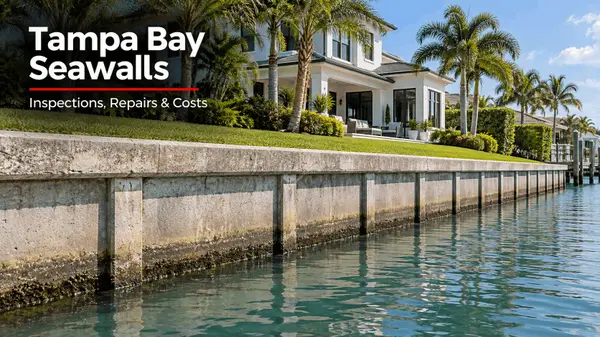
- Seawall inspection if your property is on the water (Davis Islands, Harbour Island, Bayshore Boulevard)
- WDO (termite) inspection, which is standard in Florida
- Mold or air quality testing if there’s any indication of moisture issues
In a standard contract, the buyer can request repairs or credits based on what the inspections reveal. In an “As Is” contract, the buyer accepts the property’s condition but retains the right to cancel during the inspection period if they’re unsatisfied. Either way, your agent should be preparing you for the range of possible outcomes before the inspection report arrives.
Appraisal
If the buyer is financing the purchase, the lender will order an appraisal to confirm the property’s value supports the loan amount. This typically happens during or shortly after the inspection period.
Luxury home appraisals in Tampa Bay can be tricky. Comparable sales data is often limited at higher price points, and appraisers may pull comps from neighborhoods that don’t reflect your property’s true market position. A waterfront home in Beach Park shouldn’t be compared to an inland home in Westchase — but it happens.
Here’s what you should know as a seller:
- The standard FR/BAR contract does not include a built-in appraisal contingency. If the buyer wants protection in case of a low appraisal, they need to add Comprehensive Rider F (Appraisal Contingency) to the contract.
- If the appraisal comes in below the contract price, you may need to negotiate — the buyer could ask you to reduce the price, split the difference, or the buyer may bring additional cash to close.
- Your agent can provide supporting data to the appraiser in advance — recent comparable sales, property improvements, and neighborhood context — to help ensure an accurate valuation.
Title Search and Lien Review
Shortly after the contract is executed, the title company begins its work. In Hillsborough County, the seller customarily selects the title company and pays for the owner’s title insurance policy.
The title company conducts a thorough search of public records to confirm clear ownership, identify any outstanding liens, judgments, or encumbrances, and verify that the property can be transferred free and clear. For luxury properties, this process occasionally uncovers issues such as:
- Old mortgage satisfactions that were never recorded
- HOA or CDD liens
- Open permits from previous renovations
- Boundary or easement disputes
These issues are resolvable, but they take time. The earlier your title company starts, the smoother your path to closing.
Loan Approval and Clear to Close
While you’re managing inspections and title work, the buyer is working through their lender’s underwriting process. The “loan approval period” in the contract gives the buyer a defined window to secure full mortgage approval.
Once underwriting is complete — covering income, assets, employment, credit, and the appraisal — the buyer receives a “clear to close” notice. This is the green light that financing is locked.
Your agent should be in regular communication with the buyer’s agent and lender throughout this phase to flag any delays early.
Final Walkthrough
One to two days before closing, the buyer conducts a final walkthrough of the property. This isn’t a second inspection — it’s a confirmation that the home is in the condition agreed upon in the contract, that any negotiated repairs have been completed, and that no new damage has occurred.
Make sure the home is clean, all personal property has been removed (unless included in the sale), and any agreed-upon repairs are documented with receipts or invoices.
Closing Day
Closing typically takes place at the title company’s office, though remote closings are increasingly common. As a seller, you’ll sign the deed, transfer documents, and closing statement. The buyer signs their mortgage paperwork, and the title company disburses funds.
Many luxury sellers choose to have an attorney review the documents — particularly in high-value or complex deals. After closing, the deed is recorded with the Hillsborough County Clerk of Court, and your net proceeds are typically wired the same day or the following business day.
How Long Does All of This Take?
Most financed luxury transactions in Tampa Bay close within 30 to 45 days from the effective date. Cash transactions can close in as few as 14 to 21 days if title work is expedited. The timeline depends on contract terms, the buyer’s financing, and how quickly any inspection or title issues are resolved.
Frequently Asked Questions
Can a buyer back out after an offer is accepted in Florida?
Yes, but only under specific contract provisions. During the inspection period, a buyer can cancel for any reason under an “As Is” contract. After the inspection period expires, the buyer’s ability to cancel depends on whether financing, appraisal, or other contingencies are still active. Outside of a valid contingency, walking away typically means forfeiting the earnest money deposit.
Who pays for title insurance in Tampa Bay?
In Hillsborough County, the seller customarily selects the title company and pays for the owner’s title insurance policy. The buyer typically pays for lender’s title insurance if they’re financing. However, these costs are negotiable and determined by the purchase agreement, not by law.
What happens if the appraisal comes in low on a luxury home?
If the appraisal is below the contract price and the buyer included an appraisal contingency (Comprehensive Rider F), they may renegotiate or cancel. Without that rider, the buyer is generally obligated to proceed at the contract price. In practice, most parties negotiate — the seller may reduce the price, the buyer may bring more cash, or both sides split the gap.
Shane Vanderson is a License Partner and Broker Associate with Engel & Völkers South Tampa, specializing in luxury residential real estate throughout South Tampa, Davis Islands, and Harbour Island. If you’re preparing to sell your luxury home and want a clear, managed path from contract to closing, visit shanevanderson.com or call/text 813-205-5430.
Categories
- All Blogs (212)
- 345 Bayshore (4)
- 400 Central (3)
- Apollo Beach (24)
- Arbor Greene (6)
- Art House (1)
- Avila (37)
- Ballast Point (16)
- Bayshore Beautiful (15)
- Beach Park (49)
- Bel Mar Gardens (7)
- Belleair Beach (8)
- Brandon (15)
- Carrollwood (35)
- Channel District (7)
- Cheval (22)
- Clearwater (50)
- Clearwater Beach (26)
- Cordoba Ranch (6)
- Cory Lake Isles (5)
- Culbreath Isles (27)
- Davis Islands (56)
- Downtown St Petersburg (29)
- Downtown Tampa (53)
- Golfview (20)
- Grand Central at Kennedy (2)
- Gulf Beaches (23)
- Harbour Island (53)
- Hillsborough (2)
- Home Buying (72)
- Home Improvement (6)
- Home Selling (72)
- Hotel ORA (2)
- Hunters Green (13)
- Hyde Park (48)
- Hyde Park House (3)
- Indian Rocks Beach (14)
- Ladera (8)
- Lakewood Ranch (7)
- lutz (43)
- Luxury Homes (40)
- Madeira Beach (32)
- Marina Pointe (21)
- New Suburb Beautiful (7)
- New Tampa (15)
- Odessa (37)
- Old Northeast (11)
- ONE St. Petersburg (5)
- ONE Tampa (6)
- Palma Ceia (20)
- Parkland Estates (8)
- Pasco (1)
- Pendry Tampa (11)
- Pinellas Condos (16)
- Plaza Harbour Island (5)
- Professional Athlete Advisory (3)
- Reviews (2)
- Ritz-Carlton Tampa (16)
- Riverview (26)
- Safety Harbor (7)
- Saltaire (5)
- Seminole Heights (23)
- Skypoint (6)
- Snell Isle (30)
- South Tampa (106)
- St Pete Beach (29)
- St Petersburg (74)
- Sunset Park (41)
- Tampa (94)
- Tampa Bay New Construction (7)
- Tampa Bay Real Estate (27)
- Tampa Bay Waterfront (9)
- Tampa Condos (21)
- Tampa Edition (8)
- Tampa Palms (17)
- The Nolen (2)
- The Place Channelside (2)
- Tierra Verde (21)
- Treasure Island (13)
- Venetian Isles (24)
- Viceroy Clearwater Beach (3)
- Virginia Park (19)
- Waldorf Astoria St Petersburg (5)
- Water Street (17)
- Waterleaf (4)
- Westchase (33)
- Westshore Marina District (21)
- Westshore Yacht Club (6)
- Ybor (8)
Recent Posts