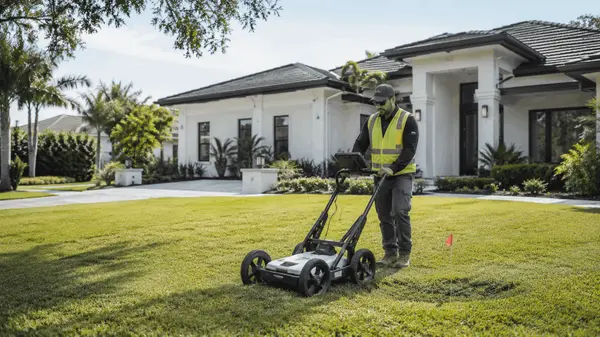
Best Custom Luxury Home Builders in Tampa Bay: Reviews and Comparisons for Odessa, Lutz, and Westchase
Which custom luxury home builders in Tampa Bay are best for Odessa, Lutz, and Westchase—and how do you compare them confidently before you sign?
If you want the “best” builder, choose the one whose portfolio matches your neighborhood, whose process is transparent (budget, allowances, change orders), and whose contract terms protect you—then verify reviews, licensing, and active job sites.
Introduction
When you’re planning a custom luxury home in Odessa, Lutz, or Westchase, you’re not just picking finishes—you’re picking a long-term partner to manage risk, timelines, and six-figure decisions. In Tampa Bay, two builders can both call themselves “luxury” while delivering totally different experiences: one may excel at clean contemporary builds with tight project controls, while another shines in transitional estates but runs looser allowances that create budget surprises.
At the decision stage, you’re typically past inspiration boards and into real conversations: land constraints, HOA rules, hurricane codes, cost-per-square-foot reality, and the question nobody loves to ask—“What happens when things go wrong?” This guide is built to help you compare custom luxury home builders the way experienced owners do: by process, contract structure, trade quality, and neighborhood fit, not just glossy photos.
You’ll leave with a practical comparison framework you can use in builder meetings, plus a shortlist approach tailored to Odessa, Lutz, and Westchase—areas where permitting, site work, and community requirements can materially change your timeline and price.
1) What “Best” Really Means in Tampa Bay Luxury Building (and How to Define It for Your Project)
In Tampa, “best custom luxury home builder” isn’t a universal title—it’s a match between your goals and a builder’s proven strengths. Before you compare reviews, you’ll get better outcomes if you define what “best” means for you in measurable terms.
Start by deciding which of these drivers is non-negotiable:
- Design leadership: You want a builder who collaborates closely with your architect/designer—or provides an in-house design-build pathway—and can execute complex elevations, large openings, and high-detail interiors.
- Budget certainty: You prefer a builder who runs a highly documented selections process, tight allowances, and clear change-order workflows to minimize surprises.
- Timeline reliability: You want strong project management, trade scheduling, and communication cadence (weekly updates, construction portal, milestone tracking).
- Neighborhood/lot expertise: You need a builder who routinely handles your area’s realities: HOA approvals, lot clearing, setbacks, drainage, well/septic vs. municipal hookups, and soil conditions.
In Odessa and parts of Lutz, site work can be the hidden “fourth cost” after land, build, and design. Clearing, fill, drainage, drive approach, and utility connections can swing your budget meaningfully. In Westchase, you may face more structured HOA review and architectural requirements, which can affect exterior choices, fencing, elevations, and even construction logistics.
Here’s the mindset shift that helps most at the BOFU stage: you’re not only buying craftsmanship—you’re buying project controls. Ask yourself:
- Do you want fixed-price with defined allowances, or cost-plus with transparency?
- Are you comfortable making hundreds of selections on a tight schedule, or do you need a builder with a guided design studio process?
- How important is a builder’s warranty responsiveness after move-in?
Defining these preferences makes reviews more meaningful. A 4.8-star builder may be “best” for an owner who loves hands-on decision-making, but not for you if you want low-friction guidance and fewer time demands.
2) How to Compare Custom Luxury Home Builders: A Decision-Stage Scorecard You Can Use
Online reviews matter, but in luxury custom building, they can be incomplete. Some owners review early (when the framing looks exciting) and don’t update later (when punch-list and warranty work happen). A better approach is to combine reviews with a structured evaluation that reveals how the builder actually runs projects.
Use this scorecard in every builder conversation:
A. Process & Communication (your stress level)
Ask for specifics, not promises:
- How often do you get updates—weekly calls, emails, a client portal?
- Who is your day-to-day contact: the owner, a project manager, a superintendent?
- What’s the typical response time for questions during construction?
Actionable tip: Ask to see an example of a weekly update report (with photos, schedule notes, and selections due). A builder who already has this system usually performs better under pressure.
B. Contract Structure & Budget Controls (your financial exposure)
Key items to compare:
- Allowance schedule: What’s included for cabinetry, appliances, lighting, tile, flooring, and landscaping?
- Change order policy: How are changes priced and approved? What is the turnaround time?
- Contingency: Is there a defined contingency line, and who controls it?
Actionable tip: Request a sample specification sheet and a sample change order form. If these documents are vague, budget surprises are more likely.
C. Trade Quality & Execution (your long-term satisfaction)
Luxury quality is trade-dependent. Ask:
- Are trades in-house or long-term partners?
- How do they handle waterproofing details in baths and exterior penetrations?
- What’s their approach to HVAC sizing and duct design for Florida humidity control?
Actionable tip: Tour an active job site (not just a finished model). Look for: clean staging, protected materials, straight framing lines, and labeled mechanicals. Job-site discipline often mirrors final quality.
D. Warranty & Post-Close Service (your life after move-in)
You want a builder who treats warranty like part of the brand.
- What’s the warranty term and what’s excluded?
- Is there a dedicated warranty manager?
- How are claims submitted and tracked?
Actionable tip: Ask, “What are the top three warranty issues you see in the first year, and how do you prevent them?” The best answers are practical (settlement cracks, HVAC balancing, door hardware adjustment) and show a prevention mindset.
E. Local Fit: Odessa vs Lutz vs Westchase (your approval speed)
Builders who regularly build in your specific submarket understand:
- Typical HOA submittal packages
- Common inspection bottlenecks
- Drainage and grading expectations
- Vendor lead times in Tampa Bay
If a builder can’t quickly describe typical constraints in your exact area, you may end up paying for their learning curve.
3) Neighborhood-Specific Guidance: Choosing the Right Luxury Builder for Odessa, Lutz, and Westchase
Your builder choice should change based on where you’re building, because the friction points change.
Odessa: land-driven complexity and “estate” expectations
Odessa often attracts buyers who want privacy, larger lots, and a true estate feel—gates, detached garages, outdoor kitchens, larger lanais, and upgraded landscape packages. The builder who’s “best” here is usually the one with repeat experience in:
- Site planning and grading for large lots
- Coordinating well/septic (where applicable) and longer utility runs
- Executing outdoor living at a high level (covered areas, summer kitchens, lighting, drainage away from the slab)
What to ask Odessa-focused builders:
- “Show me two recent Odessa (or similar) projects and walk me through site costs versus initial estimates.”
- “How do you plan drainage and manage standing water risk during rainy season?”
- “What’s your approach to outdoor kitchen ventilation, pest control, and durable finishes?”
Practical advice: In Odessa, push harder on site cost transparency. Even a strong base build estimate can be undermined by underestimated clearing, fill, and utility connections.
Lutz: mixed development patterns and permitting realism
Lutz can include established neighborhoods, larger parcels, and newer communities—meaning you might face a wider variety of rules and infrastructure conditions. The right builder here is one who can adapt process to the specific lot and can coordinate efficiently with:
- Surveying and civil/engineering (if needed)
- Tree removal constraints
- Driveway and culvert requirements where applicable
What to ask Lutz-focused builders:
- “Who handles permitting and how do you forecast inspection scheduling?”
- “If the soils report surprises us, how is that handled contractually?”
- “What’s your typical build time for a home of my size and complexity, and what drives delays?”
Practical advice: In Lutz, compare builders on timeline credibility. Ask for a sample schedule and how they handle long-lead items (windows/doors, trusses, cabinetry, specialty stone).
Westchase: HOA precision and architectural coherence
Westchase is known for community standards and a more structured neighborhood environment. Here, “best” often means:
- Strong experience working through HOA design review
- Clear exterior specification alignment (roof, paint palettes, fenestration, driveway materials, landscaping expectations)
- Professional job-site logistics that keep neighbors and the community satisfied
What to ask Westchase-focused builders:
- “How many homes have you built in HOA-regulated communities like this?”
- “Who prepares the HOA submittal package and how many rounds of revision are typical?”
- “What exterior constraints have caused redesigns in the past?”
Practical advice: In Westchase, prioritize builders with a documented preconstruction pathway—because delays often come from approvals and resubmittals, not framing speed.
4) Reviews, Comparisons, and Red Flags: How to Validate a “Top” Luxury Builder Before You Commit
At the decision stage, your goal is to validate what marketing can’t prove: consistency, integrity, and operational maturity. You can do that without relying on hearsay by using a “trust but verify” approach.
Where reviews help (and where they don’t)
Reviews are most useful for patterns:
- Communication quality
- Professionalism
- How change orders were handled
- Warranty follow-through
But reviews are less reliable for:
- Trade craftsmanship (owners may not notice what a third-party inspector sees)
- Structural and moisture details
- Whether allowances were realistic at contract signing
What to do instead: Treat reviews as a lead, then validate with documentation, site visits, and references.
Your validation checklist (practical and fast)
- Confirm licensing and insurance
- Verify the contractor is properly licensed in Florida and carries appropriate insurance (general liability and workers’ comp).
- Ask for references you can actually learn from
- Request 2–3 references: one currently building, one recently completed, one 12+ months post-close.
- Tour two job sites
- One early phase (foundation/framing)
- One late phase (trim/punch-list)
- Request a line-item scope outline
- Not just “allowances,” but what’s explicitly included/excluded (lighting fixtures vs rough electrical, landscape scope, driveway, gutters, closet systems).
- Ask how they prevent moisture problems
- Florida luxury homes succeed or fail on humidity control and waterproofing discipline. You want a builder who can explain dehumidification strategy, ventilation, and enclosure details clearly.
Red flags that should slow you down
- Vague allowances (“tile allowance: $X” with no square-foot assumptions)
- No written selection schedule, causing rushed decisions later
- Reluctance to share active sites
- Overpromising timelines without explaining procurement and inspections
- Pressure to sign quickly before you understand exclusions and change orders
How to compare “apples to apples”
If you’re talking to multiple custom luxury home builders in Tampa Bay, comparisons get messy unless you standardize inputs. Bring the same information to each builder:
- A concept plan or schematic set
- Target square footage and style
- Must-have list (ceiling heights, window package, outdoor living, pool, smart home)
- Finish level reference (photos or a spec benchmark)
Then ask each builder to provide:
- A preliminary budget range with assumptions
- A realistic timeline with lead-time notes
- A list of typical exclusions
This approach produces comparable answers and helps you identify who is truly aligned with your project.
FAQ Section
1) How much does a custom luxury home cost in Odessa, Lutz, or Westchase?
It depends on size, architecture complexity, site work, and finish level. You’ll typically see the biggest swings from (1) site prep/utilities, (2) windows/doors and exterior envelope choices, and (3) cabinetry/stone/appliances. Ask each builder for a range with written assumptions so you can compare fairly.
2) Should you choose a design-build firm or hire an architect first?
If you want a streamlined process and one team responsible for design-to-budget, design-build can reduce friction—especially if you value schedule and cost controls. If you have a highly specific vision or a complex lot, hiring an architect first can produce a stronger concept—just make sure the builder is involved early for cost reality and constructability.
3) What should you ask a luxury builder before signing a contract?
Ask for: a detailed allowance schedule, a written change-order process, a preliminary timeline with long-lead items, a clear scope of inclusions/exclusions, warranty procedures, and permission to tour active job sites. These items predict your experience more than showroom finishes do.
Closing
The best custom luxury home builders in Tampa aren’t defined by the prettiest portfolio—they’re defined by neighborhood fit, transparent budgeting, disciplined project management, and reliable warranty follow-through. If you’re building in Odessa, Lutz, or Westchase, use the scorecard above to compare builders on process and proof, not just promises.
If you want, share your neighborhood (Odessa/Lutz/Westchase), whether you already own a lot, and your approximate square footage/style. I can help you translate that into a builder interview checklist and an apples-to-apples comparison template you can use in meetings.
Categories
- All Blogs (197)
- 345 Bayshore (4)
- 400 Central (3)
- Apollo Beach (24)
- Arbor Greene (6)
- Art House (1)
- Avila (36)
- Ballast Point (15)
- Bayshore Beautiful (15)
- Beach Park (47)
- Bel Mar Gardens (7)
- Belleair Beach (8)
- Brandon (15)
- Carrollwood (34)
- Channel District (7)
- Cheval (21)
- Clearwater (50)
- Clearwater Beach (25)
- Cordoba Ranch (6)
- Cory Lake Isles (5)
- Culbreath Isles (26)
- Davis Islands (54)
- Downtown St Petersburg (28)
- Downtown Tampa (50)
- Golfview (20)
- Grand Central at Kennedy (2)
- Gulf Beaches (23)
- Harbour Island (52)
- Hillsborough (2)
- Home Buying (61)
- Home Improvement (6)
- Home Selling (68)
- Hotel ORA (2)
- Hunters Green (13)
- Hyde Park (48)
- Hyde Park House (3)
- Indian Rocks Beach (14)
- Ladera (8)
- Lakewood Ranch (7)
- lutz (42)
- Luxury Homes (38)
- Madeira Beach (32)
- Marina Pointe (19)
- New Suburb Beautiful (7)
- New Tampa (15)
- Odessa (35)
- Old Northeast (11)
- ONE St. Petersburg (5)
- ONE Tampa (5)
- Palma Ceia (18)
- Parkland Estates (8)
- Pasco (1)
- Pendry Tampa (10)
- Pinellas Condos (13)
- Plaza Harbour Island (5)
- Professional Athlete Advisory (3)
- Reviews (2)
- Ritz-Carlton Tampa (16)
- Riverview (26)
- Safety Harbor (7)
- Saltaire (5)
- Seminole Heights (23)
- Skypoint (4)
- Snell Isle (30)
- South Tampa (103)
- St Pete Beach (28)
- St Petersburg (73)
- Sunset Park (39)
- Tampa (92)
- Tampa Bay New Construction (7)
- Tampa Bay Real Estate (27)
- Tampa Bay Waterfront (8)
- Tampa Condos (17)
- Tampa Edition (8)
- Tampa Palms (17)
- The Nolen (2)
- The Place Channelside (2)
- Tierra Verde (21)
- Treasure Island (13)
- Venetian Isles (24)
- Viceroy Clearwater Beach (3)
- Virginia Park (18)
- Waldorf Astoria St Petersburg (4)
- Water Street (17)
- Waterleaf (4)
- Westchase (33)
- Westshore Marina District (21)
- Westshore Yacht Club (5)
- Ybor (8)
Recent Posts