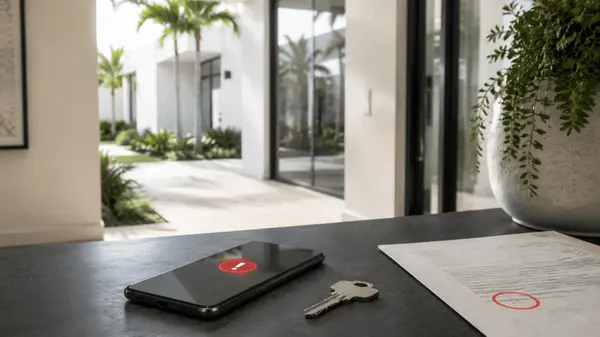
Non-Warrantable Condos in Tampa Bay: Why Some Luxury and Pre-Construction Condos Are Harder to Finance — and How Buyers Actually Close in 2026
What does it mean when a Tampa Bay condo is "non-warrantable"?
A condo is non-warrantable when the building — not the buyer — fails the project standards Fannie Mae and Freddie Mac require, so a conventional or conforming loan can't be sold to them. Common triggers include underfunded reserves, a large share of delinquent owners, one entity owning too many units, heavy commercial or hotel-style use, and active litigation. The unit can be flawless and your credit can be excellent; if the project doesn't qualify, the loan doesn't either. In Tampa Bay, the buildings most often flagged are older coastal condos still working through Florida's post-Surfside reserve and inspection requirements, and certain condo-hotel or short-term-rental projects — and the fix is usually a portfolio, non-QM, or private-bank loan rather than a conventional one.
Here's the moment that catches luxury condo buyers off guard. Your offer is accepted. Your jumbo pre-approval is clean. Then the lender sends a condo questionnaire to the association, the answers come back, and underwriting flags the building as ineligible. Your finances were never the problem — the project was.
This is one of the most misunderstood parts of buying a condo, and it matters more in Tampa Bay than in most markets because of how much of our inventory sits in coastal high-rises and a fast-moving pipeline of new towers. Here's how warrantability actually works, what's changing in 2026, and how buyers still get to the closing table.
Why a lender reviews the whole building, not just you
When you finance a single-family home, the lender underwrites you and the property. When you finance a condo, there's a third party in the deal: the association. A condo loan that's going to be sold to Fannie Mae or Freddie Mac has to clear a project review of the building's finances, reserves, insurance, owner-occupancy mix, commercial space, and legal exposure. Lenders gather this through a condo questionnaire (you may hear it called Form 1076 on the Fannie side) plus the budget, the declaration, and the master insurance certificate.
"Warrantable" simply means the project passes that review and the loan can be sold on the secondary market. "Non-warrantable" means it can't — so a lender either declines or keeps the loan on its own books at its own terms.
A few things make a building non-warrantable. The most common in 2026:
- Underfunded reserves. If the association budgets less than the required reserve allocation for capital expenses and deferred maintenance, the project can fail review. That threshold is rising — see the 2026 changes below.
- High delinquency. When 15% or more of units are 60-plus days behind on assessments, that's a red flag for the project's financial health.
- Single-entity ownership concentration. If one person or entity owns more than 20% of the units in a project of 21 or more units, the building generally fails.
- Too much commercial space. Mixed-use projects with commercial square footage above roughly 35% of the building can be ineligible.
- Active or threatened lawsuits involving the structure, safety, or the association's solvency frequently push a project to non-warrantable — common during construction-defect or post-storm disputes.
- Hotel-style operation. Condo-hotels, projects with mandatory rental programs, front desks and daily housekeeping, or heavy short-term-rental use read as "condotel" and fall outside conventional eligibility.
- Insufficient presales or developer control. A new or converting project where the developer still controls the association, or where too few units are under contract, may not yet be warrantable.
The 2026 rule changes that move buildings on and off the list
Two coordinated updates from Fannie Mae and Freddie Mac, released March 18, 2026, reshaped condo project review — and they cut in both directions.
On the looser side, the agencies retired the long-standing rule that made a project non-warrantable when more than 50% of units were investor-owned. Fannie's update (Lender Letter LL-2026-03) removed that agency-level investor-concentration cap. That's a real opening for second-home and investor-heavy Tampa Bay buildings — with a catch. Individual lenders can still impose their own overlays, so a bank may keep an investor-concentration limit even though the agency dropped it.
On the tighter side:
- Reserve floor rising to 15%. For loan applications dated on or after January 4, 2027, the minimum reserve allocation Fannie expects on a full project review climbs from 10% to 15% of the budgeted assessment income. Buildings that barely cleared the old bar may not clear the new one.
- Limited review going away. Freddie Mac's streamlined/limited review path is changing as of August 3, 2026, which means more transactions get the deeper full review — lenders will dig harder into the association's finances, insurance, and structural condition. Fewer buildings get a light touch.
The net effect: project scrutiny is increasing overall, even as one old disqualifier disappears. Don't assume last year's lender list for a building still holds.
The Florida overlay: reserves, SIRS, and milestone inspections
This is where Tampa Bay differs from the rest of the country. Florida's response to the 2021 Surfside collapse — Senate Bill 4-D in 2022, refined by HB 913 in 2025 — requires milestone structural inspections (F.S. 553.899) and Structural Integrity Reserve Studies, or SIRS (F.S. 718.112(2)(g)), for condo buildings three habitable stories and taller. The SIRS framework limited the ability to waive reserves on the structural components, and the initial SIRS deadline ran to December 31, 2025.
Those safety reforms collide directly with lender warrantability. A building that hasn't completed its SIRS, has historically waived reserves, or is staring at a large special assessment after a milestone inspection can read as non-warrantable on financial grounds — sometimes until it comes into compliance. I cover the inspection side in depth in my guide to Florida condo milestone inspections and SIRS reports, and the broader money question in how condo association fees and reserves actually work.
The practical pattern in our market: newer towers and branded residences are generally designed and funded to satisfy lender project standards from day one, while some older coastal condos in St. Petersburg, the Gulf beaches, Clearwater Beach, and along the bay are the ones most often working through reserve and inspection compliance. That's a generalization, not a verdict on any specific building — warrantability is determined building by building, as of the date you apply, and it can change quarter to quarter.
How buyers actually close on a non-warrantable condo
Non-warrantable doesn't mean unfinanceable. It means you step outside the conventional box. Your options:
- Portfolio loans. Banks and credit unions that keep loans on their own balance sheet set their own project rules and routinely lend on non-warrantable condos and condotels. Expect a larger down payment — these programs commonly cap loan-to-value around 70% to 80%, meaning 20% to 30% down — plus a higher rate and stronger reserves.
- Non-QM loans. Specialty lenders qualify you on bank statements, assets, or property cash flow rather than standard documentation, and many accept non-warrantable projects.
- Jumbo from a balance-sheet lender. Many Tampa Bay purchases in the $1M-plus range are jumbo loans anyway, and some jumbo investors are more flexible on project review than the agencies. This is where matching the right lender to the building matters most — I walk through the tracks in my Tampa Bay jumbo mortgage guide.
- Private-bank and pledged-asset financing. For high-net-worth buyers, private banks underwrite the relationship and the collateral more than the project box, which can solve a warrantability problem cleanly.
- Cash, then finance later. Warrantability mainly governs purchase financing. Some buyers close in cash to win the unit, then pursue a portfolio or delayed-financing loan once the building's status is clearer.
Each path trades a higher cost of capital for access. That's the real decision: pay more for the loan, or pass on the building.
What this means before you write an offer
If you're buying in a building three stories or taller — which is most of the condo market that interests luxury buyers — warrantability belongs on your pre-offer checklist, right next to price and HOA dues. The same diligence applies to the pre-construction pipeline, where presale and developer-control rules govern whether a unit can be conventionally financed yet; I cover the deposit side of that in my post on pre-construction luxury condo deposits in Tampa Bay.
The cleanest move is to have your lender or your agent confirm the building's current status before you go under contract, not after the questionnaire comes back. I keep a read on which Tampa Bay and Pinellas buildings finance smoothly and which ones need a portfolio lender, and that's exactly the kind of thing worth checking before you commit.
Frequently Asked Questions
How do I find out if a condo is warrantable before I make an offer?
Have your lender request the condo questionnaire, budget, reserve study, and master insurance certificate from the association, then run a project review. Your agent can often flag a likely problem earlier — heavy short-term-rental use, a pending special assessment, or an incomplete SIRS are visible before the formal review.
Can I still buy a non-warrantable condo with a mortgage?
Yes. You'll use a portfolio, non-QM, jumbo, or private-bank loan instead of a conventional one. Plan on a larger down payment — often 20% to 30% — a somewhat higher rate, and more cash reserves, because the lender is keeping the loan rather than selling it.
Does the 2026 removal of the investor-concentration cap make more condos warrantable?
It can. Fannie's March 18, 2026 update retired the agency rule that disqualified projects with more than 50% investor ownership, which helps second-home and rental-heavy buildings. But individual lenders may keep their own investor limits, and reserve and review standards are tightening at the same time, so confirm with your specific lender.
Why are some Florida condos non-warrantable when the unit itself is fine?
Warrantability is about the building, not your unit. Underfunded reserves, an incomplete Structural Integrity Reserve Study, high delinquency, litigation, or condo-hotel operation can all disqualify the project even when your condo and your finances are in great shape.
Does warrantability matter if I'm paying cash?
For your purchase, no — cash sidesteps lender project review. But it matters for resale, because your future buyer will likely need financing. A building that's hard to finance today can sit longer and price lower when you go to sell, so it's still worth understanding before you buy.
If you're weighing a condo purchase in Tampa Bay — branded residence, waterfront high-rise, or a resale in an older building — a direct conversation usually clears more up than another search. I can check a building's financing reality before you write the offer.
About Shane Vanderson
Shane Vanderson is a License Partner and Broker Associate with Engel & Völkers South Tampa, licensed in Florida since 2012 and representing buyers and sellers across Tampa Bay's high-end market. He specializes in South Tampa, Harbour Island, Hyde Park, Davis Islands, Downtown Tampa waterfront, and luxury condominiums, and holds membership in Engel & Völkers' Professional Athlete Advisory. Connect with Shane at shanevanderson.com or 813-205-5430.
This article is general information for Tampa Bay real estate consumers and is not legal, tax, or lending advice. Condo project eligibility is determined by individual lenders as of your application date and changes over time; verify a building's current status with your lender. Equal Housing Opportunity.Categories
- All Blogs (201)
- 345 Bayshore (4)
- 400 Central (3)
- Apollo Beach (24)
- Arbor Greene (6)
- Art House (1)
- Avila (36)
- Ballast Point (15)
- Bayshore Beautiful (15)
- Beach Park (47)
- Bel Mar Gardens (7)
- Belleair Beach (8)
- Brandon (15)
- Carrollwood (34)
- Channel District (7)
- Cheval (21)
- Clearwater (50)
- Clearwater Beach (25)
- Cordoba Ranch (6)
- Cory Lake Isles (5)
- Culbreath Isles (26)
- Davis Islands (54)
- Downtown St Petersburg (28)
- Downtown Tampa (51)
- Golfview (20)
- Grand Central at Kennedy (2)
- Gulf Beaches (23)
- Harbour Island (52)
- Hillsborough (2)
- Home Buying (64)
- Home Improvement (6)
- Home Selling (70)
- Hotel ORA (2)
- Hunters Green (13)
- Hyde Park (48)
- Hyde Park House (3)
- Indian Rocks Beach (14)
- Ladera (8)
- Lakewood Ranch (7)
- lutz (42)
- Luxury Homes (38)
- Madeira Beach (32)
- Marina Pointe (19)
- New Suburb Beautiful (7)
- New Tampa (15)
- Odessa (35)
- Old Northeast (11)
- ONE St. Petersburg (5)
- ONE Tampa (5)
- Palma Ceia (18)
- Parkland Estates (8)
- Pasco (1)
- Pendry Tampa (10)
- Pinellas Condos (14)
- Plaza Harbour Island (5)
- Professional Athlete Advisory (3)
- Reviews (2)
- Ritz-Carlton Tampa (16)
- Riverview (26)
- Safety Harbor (7)
- Saltaire (5)
- Seminole Heights (23)
- Skypoint (5)
- Snell Isle (30)
- South Tampa (103)
- St Pete Beach (28)
- St Petersburg (73)
- Sunset Park (39)
- Tampa (92)
- Tampa Bay New Construction (7)
- Tampa Bay Real Estate (27)
- Tampa Bay Waterfront (8)
- Tampa Condos (18)
- Tampa Edition (8)
- Tampa Palms (17)
- The Nolen (2)
- The Place Channelside (2)
- Tierra Verde (21)
- Treasure Island (13)
- Venetian Isles (24)
- Viceroy Clearwater Beach (3)
- Virginia Park (18)
- Waldorf Astoria St Petersburg (4)
- Water Street (17)
- Waterleaf (4)
- Westchase (33)
- Westshore Marina District (21)
- Westshore Yacht Club (5)
- Ybor (8)
Recent Posts